Wednesday, August 10, 2011

Album of The Year: "Helplessness Blues" by Fleet Foxes

Helplessness Blues by Fleet Foxes

Article written by Nick House.
I love the album cover.


     Helplessness Blues is the best album of 2011. It could have passed as being the best album of 1968; perhaps a lost Simon and Garfunkel world music album. I've taken the liberty of naming it Album of the Year even though the year isn't over yet, because unless Johnny Cash comes back from the grave to record a new record I doubt I'll hear anything better than this.
     It is hard to follow up a breakthrough album. If the band sticks with the formula that made them innovative in the first place, they might end up with a second album that sounds just like the first. That’s not always a bad thing, but Great Album II is never quite as good as the original. If they try to strike out in a new direction, they could end up being a band with no defined style that constantly reinvents itself. The ideal is for a second album to build upon the first, without being either a radical departure or a carbon copy.
     Fleet Foxes has achieved this ideal. Their first album was very minimalist, precise, and vocal oriented. The new record focuses more on instruments than the band’s trademark harmony. The music on Helplessness Blues is less precise than that on Fleet Foxes, but it is more exploratory, boldly going where no foxes have gone before. It is also a more personal album. On Fleet Foxes, lead singer Robin Pecknold’s voice always seemed to blend into the band’s harmonies and on some tracks it was almost completely drowned out. (Think “White Winter Hymnal”, “Sun It Rises”, “Quiet Houses”) The lyrics, while beautiful, seemed rather detached, like looking at a picture rather than looking at the thing itself.
     Things are much different here. Unlike the rather random collection of songs from Fleet Foxes, Helplessness Blues falls into a sort of pattern, telling the story of the singer’s emotional journey. It’s not a concept album per se, but one can see a sort of storyline emerge from the songs. Every storyline has a cast of characters. In Helplessness Blues, there are two main characters: the singer (played by Robin Pecknold) and his woman, whom he is having problems with. There are also a host of supporting characters: a mysterious man in “Sim Sala Bim” who is described as a “gentleman tied to the Oceanside,” a “stranger” who stands on the girl’s doorstep in “Battery Kinzie” and ominously says “nothing good.”, a “Bitter Dancer” who might be the singer’s woman or might be his son, and other, minor characters like “the slave and the empress” who both return to the dust like they came.
     Every story has a theme. This story’s theme is helplessness (duh), confusion, or a sense of being lost. Every song deals with confusion or being lost in some way, and the storyline is left somewhat unresolved.
     The record starts with the hymn like “Montezuma.” The band’s echo chamber, singing-into-a-can sound works well here: Pecknold takes the lead vocals solo and the band members back him up like a chorus of monks. If Worship music sounded like this, I would listen all the time. The singer realizes that he is older than his mother and father than when they had their daughter (and presumably disappointed that he has wasted half his life on this stupid band instead of getting a real job.) He wonders if he could ever get past only thinking of himself and learn to “dream of such a selfless and true love.”
     “Bedouin Dress” is one of the best-constructed songs on the record. Unlike some bands (Nirvana, you know who you are.) Fleet Foxes pays a lot of attention to the arrangement of their songs. This song manages to synthesize percussion, a jazzy Middle Eastern fiddle, and the band’s trademark harmonies into a pleasing whole. It’s probably the grooviest thing Fleet Foxes has done to date, and shows that they are not simply restricted to melancholy indie ballads. The singer talks about how he regrets his misspent youth, and that he would give up everything that he has “just to be at Innisfree again.” This is a reference to W.B. Yeats’ poem “The Lake Isle of Innisfree,” in which Innisfree represents the poets desire to come to some sort of home, a place of resolution.
     “Sim Sala Bim” is where the album really starts to sound like Simon and Garfunkel. This song sounds like the musical version of a very realistic dream. If you listen closely, you can hear some unusual chord progressions. The guitars, mandolins, and harps all sort of blend into an ethereal mix until the end of the track, when the song goes full tilt into a Celtic jam.
     If Jane Austen had listened to rock music, then she would have probably had “Battery Kinzie” on repeat. The song has a sort of Elizabethan or 18th century sound to it. Any band that can start a song with “I woke up one morning/all my fingers rotting” and not come off as overly melancholy has talent. This song is driven by the drums and percussion. When you listen to it, listen to the cadence and sounds of Robin Pecknold’s lyrics. In poetry, it matters just as much how the words sound as what they say.
     “The Plains/Bitter Dancer” is actually two songs. “The Plains” is an instrumental. Fleet Foxes had an instrumental on their self-titled record, “Heard Them Stirring,” but it was mainly showcasing their harmonies. “The Plains” starts with a simple drumbeat and guitar melody. Gradually, vocals and other instruments start coming into the song until it escalates into a dreamy crescendo and then fades into “Bitter Dancer.” “Bitter Dancer” is a very dark, foreboding skin. Like Bob Dylan’s “All Along the Watchtower,”
it tells part of a story, leaving the audience in the dark as to the details. The harmonies on this song are so intricate that I cannot tell which voice is the melody and which voices are the harmonies. After three dark and foreboding verses, the music takes a U-Turn and starts into a major-key section, with the singers declaring “At arm’s length, I will hold you there.” It’s a very unusual way to end a song; listen to it and I think you’ll agree.
Fleet Foxes always keeps it real.
  
  “Helplessness Blues” was the first song from this record that I heard. The first part of it is a guitar driven ballad. The lyrics are worthy of Paul Simon. The singer speaks of once feeling that he had a purpose in this world, but now he feels lost and helpless. Every verse ends with the phrase “I’ll get back to you someday soon.” leaving his problems unresolved. After the third verse, the band comes in and the song slows down. The narrator tells of his desire to live a normal life with his woman “If I had an orchard I’d work till I’m sore…and you would wait tables and soon run the store,” but ends the song with “someday I’ll be like the man on the screen,” suggesting that this idyllic life he speaks of is just an illusion.
     “The Cascades” is an almost Celtic instrumental. Robin Pecknold has said that one of his biggest influences is soundtrack music, and you can feel the soundtrack influence here. The music has a very imagistic quality to it: you can almost see the Cascades when it is playing. Listen with your eyes closed.
     “Lorelei” is something you don’t often see in modern pop music: a waltz. It is probably the most poppy thing on this record, full of 70s-nature-documentary-background -music guitar arpeggios, and flutes and background harmonies that gently hover about this song. It’s all sunshine and butterflies and stuff, so Metallica fans beware! You might just…like it. Just try not to sing along with the chorus. It ends with the sound of either cannons firing or a hockey game (I can’t tell), so that makes it slightly more manly.
     At first I paid little mind to “Someone You’d Admire,” mainly because it was short and quiet. After listening to it closely, I became convinced that it was the best song on the album. It’s a ballad with just guitar, vocals and a great melody. The best part is the lyrics. The singer sings about how he has two personas, one of who loves this woman and the other who “would just as soon cast [her] on the fire.” The song ends with the singer declaring, “After all is said and after all is done/God only knows which one of them I’ll become.” The best part is that the singer says what he wants and then ends the song, instead of dragging it out to three or four minutes like a more amateurish songwriter would.
     “The Shrine/An Argument,” another multi-part song. The first part involves the singer going to “the old stone fountain in the morning after dawn.” This part has some of the most adventurous chord progressions in the album. For those of you not musically educated, it goes from incredibly tense and strained to mellow in a split section.
     The next section is the most energetic that Fleet Foxes has been. The singer talks about his woman’s anger toward him, culminating in her “in the ocean, washing of my name from [her] throat.” The drama in the lyrics is perfectly complimented by the drama in the song.
     The final section begins with the singer singing as if in a dark cavern, “green apples hang from my tree/they belong only to me.” The singer does not reach a sense of acceptance, but instead asks the sea to “Carry me to Innisfree like pollen on the breeze.” Then after that, there’s something that sounds like a baby elephant being being beaten to death. I’m sure there’s some artsy reason to include that on the album, but it’s very annoying.
After this drama comes the Simon and Garfunkel-like lullaby “Blue Spotted Tail.” The singer asks rhetorical questions (“Why in the night sky is the earth hung?” “Why is life made only for to end.”?) These depressing questions are backed up by a beautiful, calm fingerpicked guitar melody.
     This leads me to a great digression. Perhaps one of the reasons that Christian rock music is generally lame is that there is no sense of mystery or searching in the lyrics. Robin Pecknold is an atheist or something thereabouts and he can sing songs that ask “Why is life made only for to end.” I feel like most Christian rock artists don’t ask questions like that, and would probably answer it with some sort of pat, “God made it that way” answer. Perhaps because Christians know they have the truth, they don’t write songs that have any searching or wonderment in them. Christian songs just seem to have no dramatic tension.
     After the drama of “Helplessness Blues”, “Someone You’d Admire.” “The Shrine/An Argument” and “Blue Spotted Tail,” the final track, “Grown Ocean” comes as a sort of relief. The music is mellow, but upbeat, contrasting with most of the second half of the album. The singer speaks of being in a dream where he is “as old as the mountains/still as starlight reflected in fountains.” He says that he will truly see his woman someday when he wakes from the dream into reality. The album ends with his singing “Wide eyed walker, don’t betray me/I will wake one day, don’t delay me. /wide eyed leaver, always going.” The album ends with the singer accepting his fate, but with his future still unsure.
     Fleet Foxes has managed to create a style of music that is both traditional and modern. Their music details a search for resolution, both musically and lyrically. It is a music that tells a story, maybe even a quest, full of wonder and wondering. Fleet Foxes is the defining sound of the 21st century, and when the Britney Spears ripoffs and screamo bands have all faded away, Fleet Foxes will remain. If you only buy one album this year, make it this one.


Just admit it: You know you want a beard like that.

Friday, July 29, 2011

A Dylan Eleventary

By Nick
Dig That Purple Bowtie.
It is impossible to pick a top eleven songs from Bob Dylan. First off I like so many of his songs that it’s hard to pick just 11. Secondly, Bob Dylan’s output has been so diverse that it’s not right to compare his work from one era to that from another. Instead of trying to narrow out Bob’s eleven best, I’ll just pick out eleven that I really like.
11. Knockin’ On Heaven’s Door: One of the shortest hit songs ever, only bested by “Mercedes Benz” by Janis Joplin. I appreciate the reggae version by Eric Clapton, and the version by Guns ‘n’ Roses is…unique, but Bob’s is still the best. On the Unplugged version he sings “Knock knock knockin’ on heaven’s door/just like all the other times before.” Huh?
10. Tangled Up In Blue: This song is a rara avis, a long narrative song by Dylan that actually makes some sort of sense. I read somewhere that it was about the history of cubism. I don’t want to know what the song is about; that would spoil it. Best moment: when the woman hands the singer the book of poetry “written by an Italian poet of the 13th century.” Dante and Dylan: what a great combination.
9. It’s All Over Now, Baby Blue: Bob Dylan could write great melodies. It’s a pity he couldn’t sing them. I’ve always thought this song could have been a pop smash had it been redone by another band. Favorite lyric line: “The emptyhanded painter from the streets/is drawing crazy patterns on your sheets.”
8. Positively 4th Street: The perfect takedown. What else can I say.
7. All Along The Watchtower: I like Bob’s version better than Jimi’s. (Still like Jimi’s though.) This song has some of the best atmospheric lyrics in the rock music world. Dylan builds up an engaging story, and as soon as you get into it, he ends it. Why are the riders approaching? What are the princes on the watchtower looking for? One of the reasons I like Dylan is because he’s mysterious: You can find out all about a song by Breaking Benjamin or whoever, but you’ll never totally figure out a Dylan song. (If it makes you feel better, Dylan has probably never figured out a Dylan song.)
6. To Make You Feel My Love: Some British Chick named Adele or something has made a sugary-sweet remake of this. Dylan sounds much more authentic on his version. Dylan was a rare artist in that he could take pop music and make something meaningful out of it.
5. Not Dark Yet: But it’s getting there. Don’t take my word for it, just listen to the song.
4. Maggie’s Farm: More timely than ever. Unlike so many Dylan wannabes, Dylan was able to write songs that you could crank up loud. If I had a car with huge speakers I would blare this song out like it was rap.
3. Subterranean Homesick Blues: Dylan invented rap. This song is generally known as the first white rap song. The first non-white rap song was actually by Muhammad Ali and It’s called “Theme from Muhammad Ali and his gang Vs. Mr. Tooth Decay.” (Personally, I’m going for Mr. Tooth Decay.) Anyway, “Subterranean Homesick Blues” is probably the one song that I feel defines the 60s vibe, and it also has one of the coolest titles ever.
2. John Brown: Dylan was often called a poet, usually in reverent, hushed tones. (“He was a poet.) Most of Dylan’s so called poetry is incoherent and insensible. However, occasionally, in between the “Tombstone Blues” and “Quinn The Eskimos” he came out with something that really was good poetry. This song, from the Unplugged album, is one of the best anti-war poems I’ve heard, putting Dylan in the ranks of e. e. cummings and Wilfrid Owen. I think he would be proud.
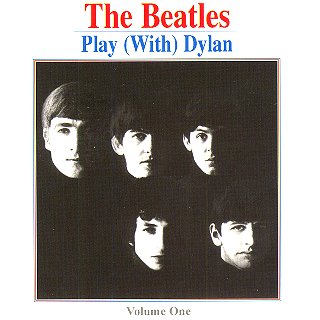
1. Dig It by The Beatles: From the Let It Be album. This is the best Dylan song ever. If you’re a Dylan fan you have to listen to it.


If Only This Had Been A Real Album
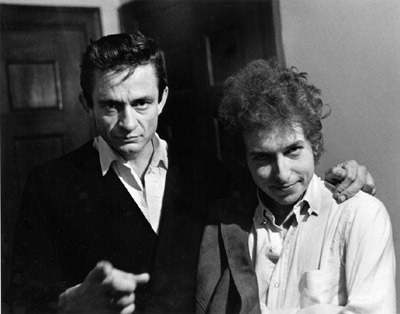
 Favorite Dylan song that’s not a Dylan song: “Girl From North Country” by Johnny Cash and Bob Dylan. Bob doesn’t even sound like himself on this duet. This is just a flat-out great song, even if both the legends singing on it had a deficient sense of rhythm and couldn’t harmonize with each other no matter how hard they tried.

Two American Legends


And did you realize that "Like A Rolling Stone" wasn't on this list?

Thursday, July 21, 2011

Bob and Larry

By Nick
Not this Bob and Larry
 Bob Dylan is one of the most influential singers and songwriters of our time. His influence has spawned countless imitators such as Connor Oberst, Bruce Springsteen, and Bob Dylan.
There is not one Bob Dylan. There are many Bob Dylans. There is the 60s Greenwhich Village Folk Scene Dylan, the Electric Dylan, The Nashville Skyline Dylan, The 70s Leisure Suit Dylan, The Artiste Auteur Dylan, the 80s Dylan (“Jokerman” sounds like a lost cut from the Napoleon Dynamite soundtrack.) The 90s Comeback Dylan, the Living Legend Dylan, and the World-Weary Troubadour Dylan. (Coming soon: Retirement Home Dylan.) In the movie I’m Not There, a really weird Dylan biopic that I have not watched, he is played by 6 different actors, including a woman. (I pity any woman ugly enough to pass for Bob Dylan.)

One phase that many people don’t know about or dismiss is the Saved Dylan. From 1979 through 1981 Dylan was a born-again Christian and recorded two Christian-themed albums. But unlike many secular artists who become Christian and then make lame music for Jesus, Bob Dylan didn’t dumb down his songwriting when he became a believer. You won’t find Jesus-is-my-girlfriend ballads on Saved and Slow Train Comin’. Instead, Dylan takes his style and Christianizes it, with good results. Unlike many Christian rock artists of today, his songs deal with theological concepts like covenants and sanctification. And not only did Dylan have good Christian lyrics, he backed it up with good Christian music. The music on Dylan’s Christian albums sounds like Gospel cranked up to 11. Listening to “Solid Rock“ or “Saved“ might give you the impression that it would be enjoyable to be a Christian. I’m sorry, but you can’t do the praise hand to anything on Air1.


Dylan and Gospel: an unlikely Combination

When Dylan was a Christian he had a brief acquaintance with Larry Norman. Larry Norman is often thought of as the first Christian rock artist. This is not true: the first Christian rock band was David and the Five Smooth Stones. Norman’s music seems babyishly tame today compared to Air1 staples like Skillet or Flyleaf (How come Christian bands can’t come up with cool names?), but in his day he was criticized for playing rock with a Christian message. He was also known as the Christian answer to Paul Simon and Bob Dylan. Larry’s music was very much worldview music. He took his Christian worldview and applied it to different areas of life. For example, in “I Am The Six O’Clock News,” he criticized the media’s reluctance to take a moral stand on what it reported, and the way it transformed tragedy into entertainment. Try finding anything of that depth on Christian radio. Another personal favorite is “Christmastime”, with lyrics like “I gotta buy a present can’t remember who it’s for/but I’ll see you in an hour when I get back from the store.” Larry seems to have anticipated The Clash’s “Lost in the Supermarket” by several years. And finally, there’s “Baroquen Spirits,” a tale of lost love from the point of view of someone living in the 1500s. Not your average subject for a rock and roll song.

Serious Songs With Larry
Larry was a good songwriter, but he was often hampered by his pre-millennial theology. One of his best known songs is “I Wish We’d All Been Ready,” a somewhat melodramatic 70s ballad about the Rapture. Regardless of whether you agree with its lyrics or not, it’s still a gorgeous song, and we can be glad that even though Larry believed premillenially, he acted postmillenially.

Why Should The Devil Have all the Good Music?
Secondary doctrine aside, both Bob Dylan and Larry Norman reached back to the roots of rock music: gospel. Rock music’s heritage is black and white gospel music of the south. Jerry Lee Lewis used to crawl up underneath a black church with his cousins (some kids named Mickey Gilley and Jimmy Swaggart.) and play air piano. Elvis was briefly a member of the Blackwood Brothers and sang Gospel music throughout his entire career. Little Richard started out in church (?) and briefly became a minister. Don’t forget Sister Rosetta Tharpe, the highly influential guitarist. Even the AC/DC hit “Highway To Hell” sounds like a Gospel song gone wrong.
Yet today’s Christian rock scene ignores the gospel roots of rock music and instead gives us bland soundalike pop acts and metrosexual metal bands. For those of us who haven’t had frontal lobotomies, there’s very little to choose from that has both good music and good lyrics. If you’re looking for solid Christian rock music, you can do no better than to start with Larry Norman and Bob Dylan’s Christian albums.
And no discussion of Bob Dylan's Christian Albums could be complete without mentioning the awesome tribute Gotta Serve Somebody: The Gospel Songs of Bob Dylan, which features covers of Dylan's Christian songs by great artists like Shirley Caesar, Aaron Neville, Mighty Clouds of Joy, and Sounds of Blackness.

Gospel Albums by Dylan: Saved!
                                       Slow Train Comin'
                                       Shot Of Love (Don't have this one.)
Larry Norman's Trilogy: Only Visiting This Planet
                                     So Long Ago the Garden
                                     In Another Land


Tuesday, July 5, 2011

Patriotic Rock Songs (!)

By Nick

Not the best picture, but it's all I could find.
Rock Music is not known as a bastion of patriotism. The majority of rock songs are apolitical, and those that are political are usually tired variations on the "I-Hate-George-Bush" theme. Many of the best rock bands are hardcore liberals, and "patriotic rock" is usually a codeword for Ted Nugent. And before I go any further, I will say that I am a conservative and I can't stand Ted Nugent's music.
     Many rock songs fall into the somewhat vague category of Anti-War or Protest songs. Many protest songs are very good, such as Bob Dylan's "John Brown". At their best anti-war songs show the horror of wars and put to shame any people who try to glorify war. Any true conservative is anti-war. At their worst (and they're far more at their worst than at their best) they are short-sighted attacks on the military that keeps them safe. It's easy to criticize your leaders if you live in a free country like America. There are plenty of American/British rockers who have criticized George W. Bush and are incredibly famous. I don't know of any Korean rockers who have criticized Kim Jong Il and gotten away with it. Going back to the main point, their are very few rock songs that speak highly of the US military.
     Alice in Chains, the 90s grunge/rock band, is not known for patriotic songs. Most of their songs fall into the general category of "I hate [Fill In The Blank]."  But on their 2nd album, Dirt, from 1992, they performed one of the best military anthems of all time, "Rooster." This is not just one of the coolest pro-military songs ever, but one of the coolest songs ever period. Alice in Chains guitarist (and wah-pedal addict) Jerry Cantrell wrote the songs about his father, Jerry Cantrell Sr., who served with the 101st Airborne Division in Vietnam, and who was nicknamed "Rooster" as a young man. The lyrics speak of the horrors of war while praising the warrior who fights for his country. Musically, the song alternates between the soft, almost psychedelic verses and the huge electric guitar buildups.

Ain't found a way to kill me yet

Eyes burn with stinging sweat
Seems every path leads me to nowhere
Wife and kids, household pet
Army green was no safe bet
The bullets scream to me from somewhere
(Commentary: The soldier in this song is trying to survive so he can get back to his "wife and kids.")

Yeah they come to snuff the Rooster
Yeah here come the Rooster, yeah
You know he ain't gonna die
No, no, no, you know he ain't gonna die
(Commentary: words on a page cannot convey how awesome this chorus is. You just have to listen to it.)

Walkin' tall machine gun man
They spit on me in my home land
Gloria sent me pictures of my boy
Got my pills 'gainst mosquito death
My buddy's breathin' his dyin' breath
Oh God please won't you help me make it through
(Commentary: In the 1960s many of the peace protestors were very rude to veterans coming back from Vietnam, spitting on them or calling them baby-killers. The naive protesters, then and now, do not understand what the soldiers go through in combat in foreign lands, away from their wife and children with their combat buddies dying. The song's singer cries out to God to help him get home alive.)

Yeah they come to snuff the rooster, ah yeah
Yeah here come the rooster, yeah
You know he ain't gonna die
No, no, you know he ain't gonna die

Also in the realm of rock songs and the 4th of July, check out "Independence Day For A Petty Thief" by House of Heroes from their album Suburba. It's not particularly patriotic (although House of Heroes has done some good pro-troop songs on their World War II album, The End Is Not The End.), but it's rockin'.

Current Listenings: The Great Hylian Revival by Jay Tholen, Helplessness Blues by Fleet
Foxes, "Gravedigger" by The Dave Matthews Band.

Saturday, July 2, 2011

Country Music and Patriotism

Part 1 of what is now a 3 part music series.


Country music is a broad category entailing many kinds of songs.  Sometimes in listening to "country stations" on the radio, I am confused about what country music is.  There are defining music styles and themes that clearly identify some songs as country. Among the many recurring themes or ideas found in country music is love of country, in this case, the country being the United States. 

What country singers often celebrate in family, grandparents, a loving wife, a farm, or a road leading home is personified in the United States as a country.  It should be no surprise that many country artists, including Johnny Cash, have been military veterans.  It should be no surprise that many country artists devote time to touring and performing for American troops overseas.

Country music heralds the flag, the military, freedom, and the unity of the idea of "God and country."  Like all patriotic sensibilities, sometimes it is overblown, often it echoes that much maligned concept of "American exceptionalism," and sometimes it is blind to America's faults.  But country music has often contained its own critiques of American actions. 

None of this can be used to easily put all country artists in the right wing of the Republican Party.  Many of the older musicians, like Bill Monroe, were old-time New Deal Democrats.  Ralph Stanley, in 2008, endorsed John Edwards (whose subsequent downfall looks like a country song) and later President Obama.  (In fact, Stanley was personally recruited by Pres. Obama.)  Del McCoury's CD Moneyland, which appeared around 2007, was a veiled call for a replacement of the Republican administration.  Some of the songs were drawn from the era of the Great Depression and were bemoaning the Hoover administration.

Still, it is hard to find many true blue liberals among country artists.  Either they are politically conservative, religiously conservative, or culturally conservative.  (And like even left-wing entertainers who profit from the free market sales of their work, they are business conservatives.)

Patriotism finds reason to celebrate the ideals and potential of this country even amidst the many flaws.
Perhaps the most popular patriotic country song of our time is Lee Greenwood's "God Bless the USA." While Greenwood has actually enjoyed many hits, this one has been the most successful and defining for him.  Like much good music, it has crossed the charts and is popular in all kinds of audiences and settings, but particularly patriotic settings.

Notice the words (and comments) below:

If tomorrow all the things were gone,

I’d worked for all my life.
And I had to start again,
with just my children and my wife.

I’d thank my lucky stars,
to be livin here today.
‘ Cause the flag still stands for freedom,
and they can’t take that away.

(Commentary:  An abiding belief in this country is the freedom we enjoy and the opportunities we have under that freedom.  So, in times like these when the economic situation is threatening "all the things...[we've] worked for all [our lives]" we still have the belief that freedom is better than material goods, that the love of a family can sustain us, and that freedom cannot be taken away.)
And I’m proud to be an American,
where at least I know I’m free.
And I won't forget the men who died,
who gave that right to me.

And I gladly stand up,
next to you and defend her still today.
‘ Cause there ain’t no doubt I love this land,
God bless the USA.

(Commentary:  The freedom exists because men have fought and died for it.)
From the lakes of Minnesota,
to the hills of Tennessee.
Across the plains of Texas,
From sea to shining sea.

From Detroit down to Houston,
and New York to L.A.
Well there's pride in every American heart,
and its time we stand and say.

(Commentary:  There is a unity that is geographic and cultural.  The idea of what an American is--which has been a topic of discussion for centuries--is found in our pride of nationhood.)
That I’m proud to be an American,
where at least I know I’m free.
And I won't forget the men who died,
who gave that right to me.

And I gladly stand up,
next to you and defend her still today.
‘ Cause there ain’t no doubt I love this land,
God bless the USA.

(Commentary: The repetition of the ideas and words of this song--accompanied by the music--reinforces the love of country based on freedom.  The prayer and wish for the song is for God's blessing on this country.)

We hope to highlight some other country songs that are patriotic in the days ahead.

Thursday, June 9, 2011

Notes from the Music Teacher (and others), part 3

Dear Messrs Berry, Buck, Mills, and Stipe,
We're sorry, but your music does not fit our needs at this time. We feel that your singer does not have enough hair, and his voice is too nasally. Also, a name like REM will not appeal to many people.
Signed,
The Record Company Man.


Dear Mrs. Johnson,
Jack has been placed in detention for skipping class to go surfing.
Signed,
The Economics Teacher


Dear Mrs. Daniels
Your son Charlie is being removed from choir. He refuses to sing properly, and instead shouts in a loud voice.
Signed,
The Choir Director

Dear Mrs. Daniels,
Your son Charlie is being removed from Orchestra. He plays his violin too fast and uses improper technique. He refuses to sit down to play his instrument, and he gives the other musicians bad feelings.
Signed,
The Orchestra Director.

Dear Mrs. Daniels,
Your son Charlie is disrupting my class. During my lectures on the Civil War he repeatedly shouts "The South's gonna do it again." If this pattern of behavior continues, I will have to take action.
Signed,
The History Teacher.

Dear Mrs. Daniels,
Your son Charlie is failing comparative religions class. He keeps insisting that "The Devil went down to Georgia", even though this has no basis in any known religious tradition.
Signed,
The Comparative Religion Teacher.


Dear Mr. Ives.
Your current image does not reflect the record company's needs. A recent poll shows that audiences prefer singers who weigh less than 200 pounds. We insist that you change your image to suit this development. Also, we do not believe a Christmas recording would be commercially viable.
Signed,
The Record Company Man


Dear Mr. and Mrs. Crosby,
Your son Bing sings too softly for choir class. He needs to improve his vibrato.
Signed,
The Choir Teacher


Dear Mrs. Armstrong,
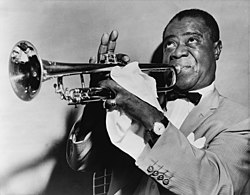
I am not making any progress with Louis. I suggest you point him to a different hobby, such as checkers.
Signed,
The Voice Teacher


Dear Mrs. Stevens,
Your son Sufyan is failing choir. He does not pay attention during class. When I try to teach he sings to himself, or scribbles on his music. His voice lacks definition, and he sings too quietly. I suggest moving him to shop class.
Signed,
The Music Teacher.


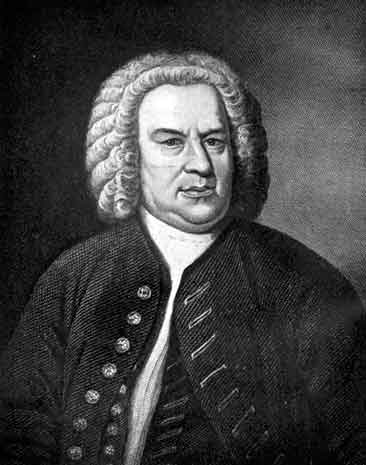
Dear Mrs. Bach,
Your son Johnny shows absolutely no aptitude for music whatsoever.
Signed,
The Conservatory Director.


Dear Mrs. Malmsteen,
Remind Yngwie that he will only become a good guitarist if he practices.
Signed,
The Guitar Teacher


Dear Mrs. Rodgers,
Tell Jimmie that yodeling is not part of our music curriculum.
Signed,
The Music Teacher.


Dear Mr. and Mrs. Tubb
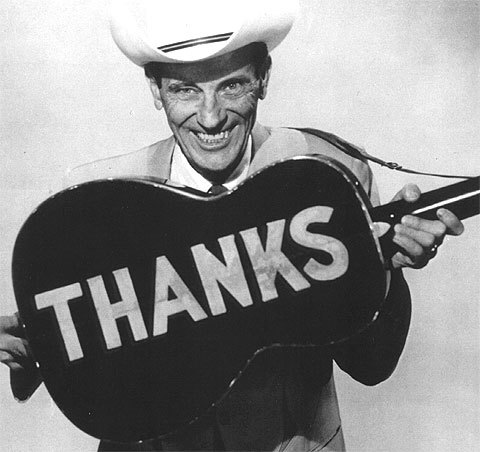
Ernest is a disturbance during choir. He spends all of his time winking at the girls.
Signed,
The Music Teacher


Dear Mrs. Carter.
A.P. is not aware that in choir one must sing at all times. "Bassing in" is not a recognized feature of classical vocalism.
Signed,
The Music Teacher.


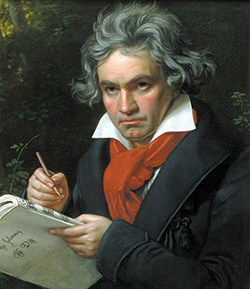
Dear Mrs. Beethoven.
No matter how much I rebuke him, Ludwig never seems to hear what I'm saying. I suggest you discipline him at home.
Signed,
The Teacher.


Dear Mrs. Stravinsky,
Your son is failing music theory.
Signed,
The Professor.


Dear Ms. Hildegard of Bingen,
You are failing music theory class. You need to watch out for those parallell 5ths.
Signed,
The Professor.


Mr. Adam Duritz (Counting Crows)
The correct way to say the phrase is "Mr. Jones and I."
Signed,
The Grammar Teacher.


Dear Mr. Dave Matthews,
Thank you for sending us your demo CD. We regret to inform you that it does not fit our current needs at the time. We suggest that you work on your enunciation and write shorter songs.
Signed,
The Record Company Man


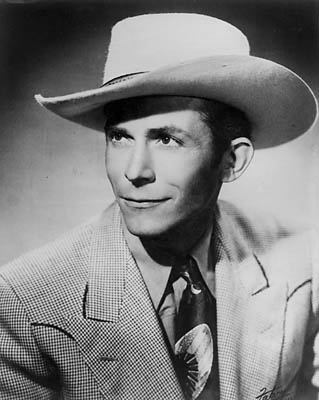
Dear Mr. and Mrs. Williams,
After much consideration, I am dropping Hank from the choir. His voice is not suited to the choir's needs. His voice sounds thin and stretched, he does not widen his mouth enough, and he is unable to enunciate words properly. He has shown up late for class, or skipped class several times, and has given as his excuse that he was "honky-tonkin', honey baby", or that he was "down on the bayou." Yesterday he greeted our piano teacher with "Hey good lookin', what you got cookin'?" He also seems to have problems with depression and social awkwardness. He told me that "he was so lonesome he could cry." I suggest setting up an appointment with the school psychologist. I think that deep down Hank is a good kid, and I hope that he will see the light.
Signed,
The Music Teacher.


Dear Mr. and Mrs. Yankovic,
Your son Alfred shows talent and potential on the accordion. I think that if he continues to practice it could help him overcome some of his social difficulties.
Signed,
The Music Teacher

Saturday, June 4, 2011

Bluegrass Music--Penetrating the Veil

Ralph Stanley: Short Life of Trouble--Songs of Grayson and Whittier
A few days ago, while listening to Ralph Stanley sing the songs of Grayson and Whittier, I was reminded of the phrase Louise Cowan uses in her essay "Epic as Cosmopoesis."  She refers to the primary feature of epic literature being the "penetration of the veil separating material and immaterial existence" or "the veil separating the human from the divine."  The point that led to this thought relates to the themes of so many of the songs on this bluegrass collection as well as songs lodged within the broader scope of bluegrass, mountain, folk, southern, and rural music.

These songs deal with brutal, cruel, sad, and tragic aspects of life.  Not every song has a somber theme, for sometimes trains, love, women, dancing, and dogs lift the spirits. Yet, the darker side of life is ever present in bluegrass music.  Consider the song "Rose Conley" in this collection.  The story in this song is about a man who kills the woman he loves.  This idea comes up repeatedly in bluegrass and folk music.  The passion and irrationality associated with love and hate can evoke the strangest of actions.  It is unthinkable, but men have responded with jilted love or unrequited love by violence.  It is the human heart in emotional chaos.  While it does not happen often, the fact that it does happen is enough to unsettle the soul.  And bluegrass music is soul music.

"Short Life of Trouble" has a theme that is self explanatory.  In this song, the young man has been rejected by the girl who promised her love only a week before.  This is a heart-ache quite familiar to many people.  Rejection is painful, but the lyrical experience of a poem or song expresses the pain of a moment.  That moment of pain, however, seems to be extended into eternity when it is happening.

Short life of trouble
A few more words to part
Short life of trouble dear girl
For a boy with a broken heart

"Nine Pound Hammer," despite its jaunty air, is a lament of the pains of physical labor.  Bluegrass music grew out of the experience of farmers, miners, lumbermill workers, factory hands, and other folks who sweated long and hard to survive.  A teacher like me who works in an air conditioned building could never write true folk and roots music about my experiences.  (Consider "I was lecturing on the history of the War Between the States...." to the tune of "Tennessee Waltz.") 

"He's Coming to Us Dead" is a mournful song about a man waiting for his son at the train station.  As the song develops, it becomes clear that the son was killed in battle and his body was being returned home for burial.  The homecoming is a sad one.

"A Dark Road is a Hard Road to Travel" works on the biblical imagery of light and darkness. 


A dark road's a hard road to travel
A light road is always the best
A dark road will lead you to trouble
A light road will lead you to rest

Those troubles can include jail and other miseries.  These things may come out of the choices men make, but the troubles are painful all the same.

"On the Banks of Old Tennessee" deals with loss and displacement.  The singer laments not having a father, a mother, a brother, sister, or true love.  They are all resting on the banks of the Old Tennessee.  Whether it is a specific tragedy or just time, he has been separated from family.  There is an empty sadness in this kind of song.  Again, that is a momentary emotional response fitting for lyrics.

It is interesting that fans and artists in the bluegrass arena gravitated to so many doleful, melancholy, shocking, and saddening themes and ideas.  No doubt this was because of the proximity of human woe and depravity.  Folks either experienced these sad times or they had kinfolks and neighbors who experienced them.  Life experiences were not sanitized.  Death was not ignored.  The tunes, often driving and perhaps upbeat, reflect an attitude that accepted the tragic dimensions of life because life here on this earth is only part of the story.  Music was a coping mechanism that enabled hurt people to press on with life under the sun.  Only God knows the reasons for all our troubles.  The music penetrates the veil separating us and our woes from God and His glory.

It is no wonder that Ralph Stanley, along with his brother Carter, borrowed from the obscure duo known as Whittier and Grayson.  Those two Virginia boys recorded about 40 songs from 1927 to 1929.  "Train 45" contains fiddle playing that, when done well, sounds like a train.  Bluegrass, country, and folk musicians were fascinated by the world-changing nature of trains.  Trains could become means of leaving, returning, sinning, hoping, or figuring out life.

Gilliam Grayson, 1888-1930, was basically blind (he had a small amount of vision), so he turned to the only outlet for a man in his situation:  He learned to play the guitar, harmonica, mandolin, organ, piano, and fiddle.  He teamed up with Henry Whittier, a guitar player.  Their small body of bluegrass songs (before it was defined as bluegrass) included such tunes as "Tom Dooley," "Little Maggie," "The Banks of the Ohio," and the songs listed above.  Their short singing career included an appearance on the Grand Ole Opry in 1930, but later that year, Grayson was killed in an auto accident. 

Sad to say, but there is no available collection of Whittier and Grayson themselves, but other artists like Stanley have kept the music alive.  This collection was nominated for a Grammy Award for Best Bluegrass Album in 1998.

Pioneers of Roots Music: Gilliam Grayson and Henry Whittier (c. 1928)