Tuesday, July 5, 2011

Patriotic Rock Songs (!)

By Nick

Not the best picture, but it's all I could find.
Rock Music is not known as a bastion of patriotism. The majority of rock songs are apolitical, and those that are political are usually tired variations on the "I-Hate-George-Bush" theme. Many of the best rock bands are hardcore liberals, and "patriotic rock" is usually a codeword for Ted Nugent. And before I go any further, I will say that I am a conservative and I can't stand Ted Nugent's music.
     Many rock songs fall into the somewhat vague category of Anti-War or Protest songs. Many protest songs are very good, such as Bob Dylan's "John Brown". At their best anti-war songs show the horror of wars and put to shame any people who try to glorify war. Any true conservative is anti-war. At their worst (and they're far more at their worst than at their best) they are short-sighted attacks on the military that keeps them safe. It's easy to criticize your leaders if you live in a free country like America. There are plenty of American/British rockers who have criticized George W. Bush and are incredibly famous. I don't know of any Korean rockers who have criticized Kim Jong Il and gotten away with it. Going back to the main point, their are very few rock songs that speak highly of the US military.
     Alice in Chains, the 90s grunge/rock band, is not known for patriotic songs. Most of their songs fall into the general category of "I hate [Fill In The Blank]."  But on their 2nd album, Dirt, from 1992, they performed one of the best military anthems of all time, "Rooster." This is not just one of the coolest pro-military songs ever, but one of the coolest songs ever period. Alice in Chains guitarist (and wah-pedal addict) Jerry Cantrell wrote the songs about his father, Jerry Cantrell Sr., who served with the 101st Airborne Division in Vietnam, and who was nicknamed "Rooster" as a young man. The lyrics speak of the horrors of war while praising the warrior who fights for his country. Musically, the song alternates between the soft, almost psychedelic verses and the huge electric guitar buildups.

Ain't found a way to kill me yet

Eyes burn with stinging sweat
Seems every path leads me to nowhere
Wife and kids, household pet
Army green was no safe bet
The bullets scream to me from somewhere
(Commentary: The soldier in this song is trying to survive so he can get back to his "wife and kids.")

Yeah they come to snuff the Rooster
Yeah here come the Rooster, yeah
You know he ain't gonna die
No, no, no, you know he ain't gonna die
(Commentary: words on a page cannot convey how awesome this chorus is. You just have to listen to it.)

Walkin' tall machine gun man
They spit on me in my home land
Gloria sent me pictures of my boy
Got my pills 'gainst mosquito death
My buddy's breathin' his dyin' breath
Oh God please won't you help me make it through
(Commentary: In the 1960s many of the peace protestors were very rude to veterans coming back from Vietnam, spitting on them or calling them baby-killers. The naive protesters, then and now, do not understand what the soldiers go through in combat in foreign lands, away from their wife and children with their combat buddies dying. The song's singer cries out to God to help him get home alive.)

Yeah they come to snuff the rooster, ah yeah
Yeah here come the rooster, yeah
You know he ain't gonna die
No, no, you know he ain't gonna die

Also in the realm of rock songs and the 4th of July, check out "Independence Day For A Petty Thief" by House of Heroes from their album Suburba. It's not particularly patriotic (although House of Heroes has done some good pro-troop songs on their World War II album, The End Is Not The End.), but it's rockin'.

Current Listenings: The Great Hylian Revival by Jay Tholen, Helplessness Blues by Fleet
Foxes, "Gravedigger" by The Dave Matthews Band.

Saturday, July 2, 2011

Country Music and Patriotism

Part 1 of what is now a 3 part music series.


Country music is a broad category entailing many kinds of songs.  Sometimes in listening to "country stations" on the radio, I am confused about what country music is.  There are defining music styles and themes that clearly identify some songs as country. Among the many recurring themes or ideas found in country music is love of country, in this case, the country being the United States. 

What country singers often celebrate in family, grandparents, a loving wife, a farm, or a road leading home is personified in the United States as a country.  It should be no surprise that many country artists, including Johnny Cash, have been military veterans.  It should be no surprise that many country artists devote time to touring and performing for American troops overseas.

Country music heralds the flag, the military, freedom, and the unity of the idea of "God and country."  Like all patriotic sensibilities, sometimes it is overblown, often it echoes that much maligned concept of "American exceptionalism," and sometimes it is blind to America's faults.  But country music has often contained its own critiques of American actions. 

None of this can be used to easily put all country artists in the right wing of the Republican Party.  Many of the older musicians, like Bill Monroe, were old-time New Deal Democrats.  Ralph Stanley, in 2008, endorsed John Edwards (whose subsequent downfall looks like a country song) and later President Obama.  (In fact, Stanley was personally recruited by Pres. Obama.)  Del McCoury's CD Moneyland, which appeared around 2007, was a veiled call for a replacement of the Republican administration.  Some of the songs were drawn from the era of the Great Depression and were bemoaning the Hoover administration.

Still, it is hard to find many true blue liberals among country artists.  Either they are politically conservative, religiously conservative, or culturally conservative.  (And like even left-wing entertainers who profit from the free market sales of their work, they are business conservatives.)

Patriotism finds reason to celebrate the ideals and potential of this country even amidst the many flaws.
Perhaps the most popular patriotic country song of our time is Lee Greenwood's "God Bless the USA." While Greenwood has actually enjoyed many hits, this one has been the most successful and defining for him.  Like much good music, it has crossed the charts and is popular in all kinds of audiences and settings, but particularly patriotic settings.

Notice the words (and comments) below:

If tomorrow all the things were gone,

I’d worked for all my life.
And I had to start again,
with just my children and my wife.

I’d thank my lucky stars,
to be livin here today.
‘ Cause the flag still stands for freedom,
and they can’t take that away.

(Commentary:  An abiding belief in this country is the freedom we enjoy and the opportunities we have under that freedom.  So, in times like these when the economic situation is threatening "all the things...[we've] worked for all [our lives]" we still have the belief that freedom is better than material goods, that the love of a family can sustain us, and that freedom cannot be taken away.)
And I’m proud to be an American,
where at least I know I’m free.
And I won't forget the men who died,
who gave that right to me.

And I gladly stand up,
next to you and defend her still today.
‘ Cause there ain’t no doubt I love this land,
God bless the USA.

(Commentary:  The freedom exists because men have fought and died for it.)
From the lakes of Minnesota,
to the hills of Tennessee.
Across the plains of Texas,
From sea to shining sea.

From Detroit down to Houston,
and New York to L.A.
Well there's pride in every American heart,
and its time we stand and say.

(Commentary:  There is a unity that is geographic and cultural.  The idea of what an American is--which has been a topic of discussion for centuries--is found in our pride of nationhood.)
That I’m proud to be an American,
where at least I know I’m free.
And I won't forget the men who died,
who gave that right to me.

And I gladly stand up,
next to you and defend her still today.
‘ Cause there ain’t no doubt I love this land,
God bless the USA.

(Commentary: The repetition of the ideas and words of this song--accompanied by the music--reinforces the love of country based on freedom.  The prayer and wish for the song is for God's blessing on this country.)

We hope to highlight some other country songs that are patriotic in the days ahead.

Thursday, June 9, 2011

Notes from the Music Teacher (and others), part 3

Dear Messrs Berry, Buck, Mills, and Stipe,
We're sorry, but your music does not fit our needs at this time. We feel that your singer does not have enough hair, and his voice is too nasally. Also, a name like REM will not appeal to many people.
Signed,
The Record Company Man.


Dear Mrs. Johnson,
Jack has been placed in detention for skipping class to go surfing.
Signed,
The Economics Teacher


Dear Mrs. Daniels
Your son Charlie is being removed from choir. He refuses to sing properly, and instead shouts in a loud voice.
Signed,
The Choir Director

Dear Mrs. Daniels,
Your son Charlie is being removed from Orchestra. He plays his violin too fast and uses improper technique. He refuses to sit down to play his instrument, and he gives the other musicians bad feelings.
Signed,
The Orchestra Director.

Dear Mrs. Daniels,
Your son Charlie is disrupting my class. During my lectures on the Civil War he repeatedly shouts "The South's gonna do it again." If this pattern of behavior continues, I will have to take action.
Signed,
The History Teacher.

Dear Mrs. Daniels,
Your son Charlie is failing comparative religions class. He keeps insisting that "The Devil went down to Georgia", even though this has no basis in any known religious tradition.
Signed,
The Comparative Religion Teacher.


Dear Mr. Ives.
Your current image does not reflect the record company's needs. A recent poll shows that audiences prefer singers who weigh less than 200 pounds. We insist that you change your image to suit this development. Also, we do not believe a Christmas recording would be commercially viable.
Signed,
The Record Company Man


Dear Mr. and Mrs. Crosby,
Your son Bing sings too softly for choir class. He needs to improve his vibrato.
Signed,
The Choir Teacher


Dear Mrs. Armstrong,
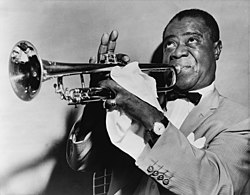
I am not making any progress with Louis. I suggest you point him to a different hobby, such as checkers.
Signed,
The Voice Teacher


Dear Mrs. Stevens,
Your son Sufyan is failing choir. He does not pay attention during class. When I try to teach he sings to himself, or scribbles on his music. His voice lacks definition, and he sings too quietly. I suggest moving him to shop class.
Signed,
The Music Teacher.


Dear Mrs. Bach,
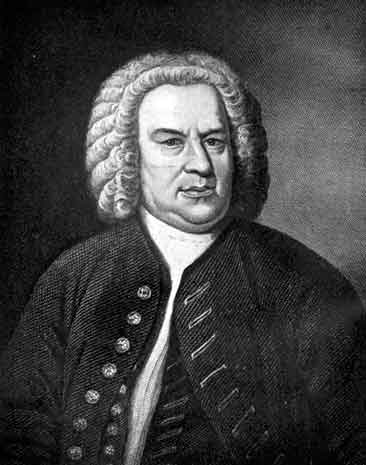
Your son Johnny shows absolutely no aptitude for music whatsoever.
Signed,
The Conservatory Director.


Dear Mrs. Malmsteen,
Remind Yngwie that he will only become a good guitarist if he practices.
Signed,
The Guitar Teacher


Dear Mrs. Rodgers,
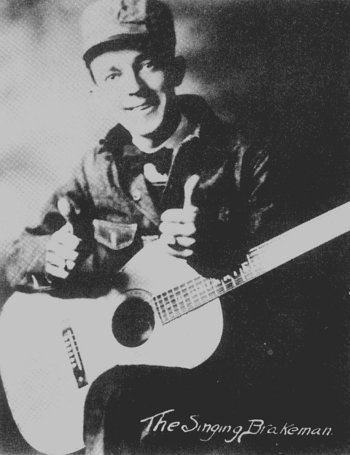
Tell Jimmie that yodeling is not part of our music curriculum.
Signed,
The Music Teacher.


Dear Mr. and Mrs. Tubb
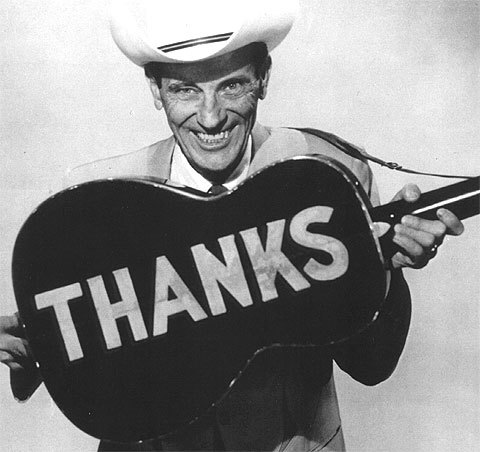
Ernest is a disturbance during choir. He spends all of his time winking at the girls.
Signed,
The Music Teacher


Dear Mrs. Carter.
A.P. is not aware that in choir one must sing at all times. "Bassing in" is not a recognized feature of classical vocalism.
Signed,
The Music Teacher.


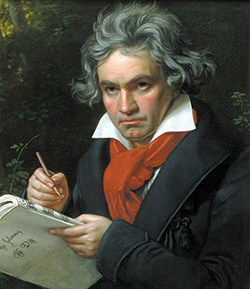
Dear Mrs. Beethoven.
No matter how much I rebuke him, Ludwig never seems to hear what I'm saying. I suggest you discipline him at home.
Signed,
The Teacher.


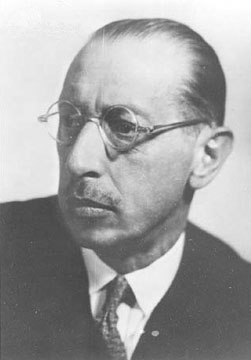
Dear Mrs. Stravinsky,
Your son is failing music theory.
Signed,
The Professor.


Dear Ms. Hildegard of Bingen,
You are failing music theory class. You need to watch out for those parallell 5ths.
Signed,
The Professor.


Mr. Adam Duritz (Counting Crows)
The correct way to say the phrase is "Mr. Jones and I."
Signed,
The Grammar Teacher.


Dear Mr. Dave Matthews,
Thank you for sending us your demo CD. We regret to inform you that it does not fit our current needs at the time. We suggest that you work on your enunciation and write shorter songs.
Signed,
The Record Company Man


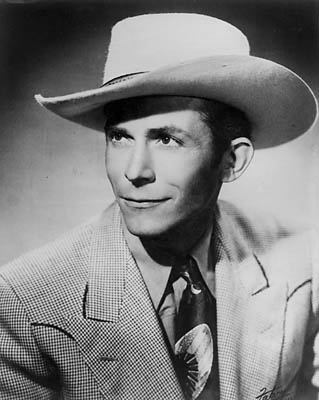
Dear Mr. and Mrs. Williams,
After much consideration, I am dropping Hank from the choir. His voice is not suited to the choir's needs. His voice sounds thin and stretched, he does not widen his mouth enough, and he is unable to enunciate words properly. He has shown up late for class, or skipped class several times, and has given as his excuse that he was "honky-tonkin', honey baby", or that he was "down on the bayou." Yesterday he greeted our piano teacher with "Hey good lookin', what you got cookin'?" He also seems to have problems with depression and social awkwardness. He told me that "he was so lonesome he could cry." I suggest setting up an appointment with the school psychologist. I think that deep down Hank is a good kid, and I hope that he will see the light.
Signed,
The Music Teacher.


Dear Mr. and Mrs. Yankovic,
Your son Alfred shows talent and potential on the accordion. I think that if he continues to practice it could help him overcome some of his social difficulties.
Signed,
The Music Teacher

Saturday, June 4, 2011

Bluegrass Music--Penetrating the Veil

Ralph Stanley: Short Life of Trouble--Songs of Grayson and Whittier
A few days ago, while listening to Ralph Stanley sing the songs of Grayson and Whittier, I was reminded of the phrase Louise Cowan uses in her essay "Epic as Cosmopoesis."  She refers to the primary feature of epic literature being the "penetration of the veil separating material and immaterial existence" or "the veil separating the human from the divine."  The point that led to this thought relates to the themes of so many of the songs on this bluegrass collection as well as songs lodged within the broader scope of bluegrass, mountain, folk, southern, and rural music.

These songs deal with brutal, cruel, sad, and tragic aspects of life.  Not every song has a somber theme, for sometimes trains, love, women, dancing, and dogs lift the spirits. Yet, the darker side of life is ever present in bluegrass music.  Consider the song "Rose Conley" in this collection.  The story in this song is about a man who kills the woman he loves.  This idea comes up repeatedly in bluegrass and folk music.  The passion and irrationality associated with love and hate can evoke the strangest of actions.  It is unthinkable, but men have responded with jilted love or unrequited love by violence.  It is the human heart in emotional chaos.  While it does not happen often, the fact that it does happen is enough to unsettle the soul.  And bluegrass music is soul music.

"Short Life of Trouble" has a theme that is self explanatory.  In this song, the young man has been rejected by the girl who promised her love only a week before.  This is a heart-ache quite familiar to many people.  Rejection is painful, but the lyrical experience of a poem or song expresses the pain of a moment.  That moment of pain, however, seems to be extended into eternity when it is happening.

Short life of trouble
A few more words to part
Short life of trouble dear girl
For a boy with a broken heart

"Nine Pound Hammer," despite its jaunty air, is a lament of the pains of physical labor.  Bluegrass music grew out of the experience of farmers, miners, lumbermill workers, factory hands, and other folks who sweated long and hard to survive.  A teacher like me who works in an air conditioned building could never write true folk and roots music about my experiences.  (Consider "I was lecturing on the history of the War Between the States...." to the tune of "Tennessee Waltz.") 

"He's Coming to Us Dead" is a mournful song about a man waiting for his son at the train station.  As the song develops, it becomes clear that the son was killed in battle and his body was being returned home for burial.  The homecoming is a sad one.

"A Dark Road is a Hard Road to Travel" works on the biblical imagery of light and darkness. 


A dark road's a hard road to travel
A light road is always the best
A dark road will lead you to trouble
A light road will lead you to rest

Those troubles can include jail and other miseries.  These things may come out of the choices men make, but the troubles are painful all the same.

"On the Banks of Old Tennessee" deals with loss and displacement.  The singer laments not having a father, a mother, a brother, sister, or true love.  They are all resting on the banks of the Old Tennessee.  Whether it is a specific tragedy or just time, he has been separated from family.  There is an empty sadness in this kind of song.  Again, that is a momentary emotional response fitting for lyrics.

It is interesting that fans and artists in the bluegrass arena gravitated to so many doleful, melancholy, shocking, and saddening themes and ideas.  No doubt this was because of the proximity of human woe and depravity.  Folks either experienced these sad times or they had kinfolks and neighbors who experienced them.  Life experiences were not sanitized.  Death was not ignored.  The tunes, often driving and perhaps upbeat, reflect an attitude that accepted the tragic dimensions of life because life here on this earth is only part of the story.  Music was a coping mechanism that enabled hurt people to press on with life under the sun.  Only God knows the reasons for all our troubles.  The music penetrates the veil separating us and our woes from God and His glory.

It is no wonder that Ralph Stanley, along with his brother Carter, borrowed from the obscure duo known as Whittier and Grayson.  Those two Virginia boys recorded about 40 songs from 1927 to 1929.  "Train 45" contains fiddle playing that, when done well, sounds like a train.  Bluegrass, country, and folk musicians were fascinated by the world-changing nature of trains.  Trains could become means of leaving, returning, sinning, hoping, or figuring out life.

Gilliam Grayson, 1888-1930, was basically blind (he had a small amount of vision), so he turned to the only outlet for a man in his situation:  He learned to play the guitar, harmonica, mandolin, organ, piano, and fiddle.  He teamed up with Henry Whittier, a guitar player.  Their small body of bluegrass songs (before it was defined as bluegrass) included such tunes as "Tom Dooley," "Little Maggie," "The Banks of the Ohio," and the songs listed above.  Their short singing career included an appearance on the Grand Ole Opry in 1930, but later that year, Grayson was killed in an auto accident. 

Sad to say, but there is no available collection of Whittier and Grayson themselves, but other artists like Stanley have kept the music alive.  This collection was nominated for a Grammy Award for Best Bluegrass Album in 1998.

Pioneers of Roots Music: Gilliam Grayson and Henry Whittier (c. 1928)


Saturday, May 21, 2011

Ivan and Alyosha

Nicholas and I have been delighting in our reading and discussion of one of our favorite books, The Brothers Karamazov, by one of our most admired authors, Fyodor Dostoevsky.  (Read recent posts on The Brothers Karamazov).  We were, therefore, pleasantly surprised when our friend George Grant recently mentioned on his website that free downloads were available from a singing duo named Ivan and Alyosha.
(Free Noise Trade download of the fantastic Ivan and Alyosha EP: (http://bit.ly/j65dPJ)

In The Brothers Karamazov, Ivan is the probing atheist who asks the most serious questions and raises the most serious objections to a belief in God.  Unlike all too many atheists, he realizes where his position leads.  "If there is no God, then everything is permitted."  Alyosha, in the novel, is one of the most powerful Christian characters ever created in fiction.  He is the angel, or the messenger, to all the other characters in the story.  His faith is pure and deeply held, but his Christian living is not filled with fluff, syrup, or sugary sweet answers.  His is a powerful Christian love, motivated and taught to him by Father Zosima.

We have enjoyed getting acquainted with this talented young group--which actually includes two other musicians.  Their music has a harmony like that of Simon and Garfunkel, with a very comfortable feel, even for a fellow deeply rooted in country music, like me.

I will let Nick take the helm and further describe the music and the musicians.


Ivan and Alyosha
Ivan and Alyosha is an indie rock band from Seattle. Their music ranges from driving indie pop in songs like "Father's Be Kind" to the symphonic indie of "Everything is Burning." Their lyrics range from traditional love songs ("I Was Born To Love Her") to songs that deal with less traditional themes, such as having a child ("Living For Someone"). Their most defining song to date is the Bob Dylan-esque "Glorify." The song, like good poetry, is heavily ironic and open to multiple interpretations. I'll let the song's lyrics speak for themselves.

I left my family and my home
to fight the battle on my own
I stole a car and drove away
but in my hate St Paul did say

Glorify the Lord above
with your drink and making love
Glorify the Lord, my son
with your whiskey and your guns

I shot my foe, now I feel bad
I beat my wife, now I feel sad
I curse my brother and my friend
I broke my mother's heart again

Glorify the Lord above
with your drink and making love
Glorify the Lord, my son
with your whiskey and your guns

And I'll tune my heart and tune my strings
and see what giving thanks might bring
For all I have was always thine
but I was fool to think it mine

We'll glorify the Lord above
with your drink and making love
Glorify the Lord, my son
with your whiskey and your gun

Well if you stay or if you go
or if you stand or you're brought low
We'll drink the wine, we'll eat the bread
But don't forget what Jesus said

Glorify the Lord above
with your drink and making love
Glorify the Lord my son
'till your work on earth is done

I said to glorify the Lord above
oh if you've plenty, if you've none
Glorify the Lord my son
with your whiskey and your gun

Much like The Brothers Karamozov, the song doesn't seem to provide any easy answers. It seems to be about how people are supposed to do everything to the glory of God, but instead do wicked and awful things, like beating their wives. However, it does not seem to be an attack on Christianity-- notice the lines "For all I have was always thine/but I was fool to think it mine." It seems like the band is recognizing that people are not glorifying God like they should.

We hope to learn and share more about this group in the future.

Monday, April 25, 2011

Not the Hits-Great songs off the album.

By Nick
These are just a few good songs from albums that didn't become radio hits. Sometimes the hits by a band are good: Chicago's album songs are often unbearable. In other cases, such as The Fray and OneRepublic, the album cuts are the best songs. These songs are in no particular order.

"Being For The Benefit of Mr. Kite." by The Beatles. The Sgt. Pepper's album had a lot of good hits on it--scratch that, every song on that album is good. The Beatle's musical diversity was so great that they could write a circus music song with lyrics taken from a circus flyer from the 1800s, and it was still good.

"Reflections" by the Charlie Daniels Band. I don't know if this song was a hit or not. You can find it on the 3-disc collection of his music. Songs like "The South's Gonna Do It Again" and "The Devil Went Down To Georgia" were good. This one is great. It's a tribute to musicians who have passed on, specifically Elvis, Janis Joplin, and Ronnie Van Zandt of Lynyrd Skynyrd (The most underrated of classic rock bands). "Heaven should be proud."

"Hundred" by The Fray. The Fray is best known for their hits, "How To Save A Life", "Over My Head." Those songs are awful compared to the cuts from their first album. Unlike many piano-pop bands, The Fray actually has a talented pianist, and this ballad shows him off at his best ability. All the other album cuts are very good too.

"Oh My God" by Jars of Clay. Off the Good Monsters album. Probably the best song on a life-changing album. I can't describe it, just listen to it. I will warn, however, that it makes more sense in the context of the album than listened to on its own.

"Four Walls of Raiford" by Lynyrd Skynyrd. A lost Skynyrd track, and their best song. Most of the Skynyrd songs that get played on the radio are either not that good to begin with, or played to death (There should be a moratorium on Sweet Home Alabama). This song is about a Vietnam vet who is thrown into prison for a crime he didn't commit, and is escaping. It's heart wrenching.
And in an A.D.D. moment, another great Vietnam vet song is "Rooster" by Alice in Chains, which is definitely in the top five patriotic rock songs of all time.

"All Fall Down" by OneRepublic. OneRepublic's best music is hidden. This one is an acoustic-guitar driven song, complimented by some tense strings. Despair never sounded so good, except on the other good despair songs, but that's a topic for a later post.

"Why Not Smile" by R.E.M. From the Up album, although I have never heard it in the context; I know it from a compilation. The first R.E.M. song I heard, a haunting acoustic ballad. Michael Stipe doesn't even sound like Michael Stipe on the song.

"Dearest" by Buddy Holly. The best Buddy song, free from the mindless rockabilly of his earlier music, or the mindless syrupy fluff of his later music. Buddy had a unique voice, was a great stylist, and definitely had not reached the peak of his potential when he died. If he had continued to write songs like this, he would be even more remembered.

"Life In Rain" by Remy Zero. From the Villa Elaine album. I don't know why, but most of these songs are ballads. I guess it is because the record companies pick out the fast, catchy songs for singles. This song is particularly relevant because it has been raining a lot around here lately. If you listen to it, you can feel the rain.

"The Dangling Conversation" by Simon and Garfunkel, off the Essential album, one of the songs put in as padding in between the songs like "Sounds of Silence", "Scarborough Fair", and that gospel song. Simon and Garfunkel were the first to write rock songs with intelligent, thoughtful lyrics. Bob Dylan, who came around the same time period, wrote songs with all the hallmarks of intellectualism except for intelligibility. Anyway, this song shows what good lyric-writing should be. I think Paul Simon was right in choosing Robert Frost.

"Lady Jane" by The Rolling Stones. The Rolling Stones at their worst turned out crass, stupid pop music, were personally vulgar and snotty, stole music from authentic black American musicians, and sang in a stupid fake Southern accent. At their best they did songs like this, a pseudo-elizabethan ballad. The mellow Stones beat the loud and rowdy Stones or the old and ugly Stones any day.

"On Fire" by Switchfoot. From the Beautiful Letdown album. Switchfoot's ballads are killers (in a good way, not in a Jack-the-Ripper kind of way), and this is one of the best. Still not sure what it's about, but the passion in it makes up for my confusion.

"Sooner or Later (Soren's Song)" by Switchfoot. From the New Way To Be Human album. Coming in the tradition of Paul Simon (see above), Jon Foreman writes a rock song about a philosopher, Soren Kierkegaard. And it's a really good rock song, too. Coincidentally, the song "Leaf" by mewithoutYou also mentions Kierkegaard's book Purity of Heart is to Want One Thing. It seems that Christian Existentialism is a popular theme in intelligent Christian rock music, and this should be explored more deeply.

"Red Hill Mining Town" by U2. From The Joshua Tree. You gotta love the good old sorta Christian liberals. The multi-millionaire rock star Bono knows so much about the working class. I mean, he's got pink glasses, so he must know everything, right? In all seriousness, this track from U2's breakout album is good, despite the fact that it probably has some sort of "share all your money" theme behind it. Back in the day, before they became big time rock stars, U2 was capable of writing lots of very moving songs. They still are, occasionally.

Do you have any favorite songs by artists that weren't radio singles? Post a comment and tell us.
Currently Listening: Abandon Kansas EP, Abandon Kansas.

Saturday, April 23, 2011

Music for Easter Week-end

The Christ--His Passion--Remembering the Sacrifice
This CD is a family favorite and might be found playing anytime during the year.  I especially enjoy it during my morning reading time.  It is a marvelous collection of meditative contemporary Christian songs, all dealing with the theme of Christ's suffering and death.  It was an introduction to us of many Christian artists we now know and enjoy.  I first picked this CD up off of a bargain table at the local Baptist Book Store.  It had no price tag, so the clerk just gave it to me.  What an amazing gift.

Songs and Artists on this CD:

I Remember You - Mac Powell with Gene Eugene

Jesus Went To The Garden - Derri Daugherty, Paul Colman, and others

Kyrie Eleison - Leigh Nash (My children have often sung this short prayer from this CD.)

Marvelous Light - Derek Webb, Sandra McCracken

Were You There When The Sun Refused ToShine - Maddy Madeira

Precious Jesus - The Choir with Leigh Nash

With Every Breath - Leigh Nash & DanHaseltine

Beautiful Scandalous Night - Sixpence, None The Richer & Bebo Norman

Lamb Of God (Agnus Dei) - Bebo Norman & Mark Hall & Megan Garrett (Casting Crowns)

Yes I Will - Bebo Norman and Joy Williams

Communion - Cliff & Danielle Young & Phil Keaggy

Were You There When They Crucified My Lord - Phil Keaggy

The Stone - Jars of Clay

Another favorite CD is Songs Inspired by the Passion of the Christ.


The Passion of the Christ: Songs Inspired By
Songs Inspired by the Passion of the Christ

The songs on this collection are more wide-ranging and eclectic, some not even exactly Christian, yet overall, quite a moving collection.

This CD includes

1.  How Can You Refuse Him by Hank Williams and sung by his granddaughter, Holly Williams

2.  Stranger in a Strange Land, sung by Leon Russell and the Shelter People

3.  Are You Afraid to Die, with a clip from a Billy Graham sermon.  This is a great Ira Louvin classic, sung by Ricky Skaggs, one of the best Bluegrass artists around today.

4.  Please Carry Me Home, sung by Jessi Colter (Waylon Jennings' widow) and Shooter Jennings (Waylon's son)

5.  Ave Maria by Delores O'Riordan, a beautiful heretical song.  Some Protestant with Latin training needs to correct the song.

 6.  Why Me by Lee Ryan

7.  Darker with the Day, sung by Nick Cave and the Bad Seeds.  Haunting and strange.

8.  Where No One Stands Alone, sung by Elvis.  He often professed who the true King is.

9.  Harm's Way, sung by The Ghost Who Walks. 

10.  By the Rivers Dark, sung by Leonard Cohen.  Very strange song, but I like it.

11.  Precious Lord, sung by the Blind Boys of Alabama.  The Blind Boys are among the best.

12.  Not Dark Yet, sung by Bob Dylan.  Dylan often hits the nerve of reality.  Great poetry.