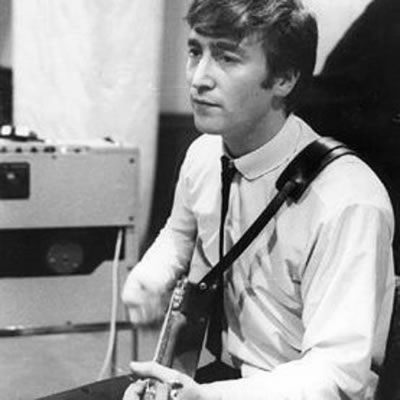
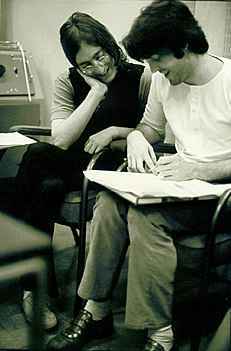
House of Heroes was a band that didn’t immediately strike me as something. When I first heard them I dismissed them as just another nasally, pretentious rock group. It was only after multiple listening to Say No More over a long period of time that I grew to appreciate the group’s lyrical style and musical chops. Seeing them live was another turning point in my House of Heroes’ experience, as was purchasing their World War II-themed CD The End is Not The End. It was this record that convinced me of their merit as good songwriters, and showed off their melodic talents, putting them in my roster of my favorite modern bands. Their House of Heroes Meets the Beatles EP was another solid step in the right direction, proving that they could cover Beatles songs without totally desecrating them. Then came Suburba, the group’s Springsteen-esque tribute to growing up in the American suburbs. I was afraid when I saw the early buzz about Suburba that it would be a pop album. Well, it is. And it’s one of the greatest pop albums ever made.
Many reviewers have compared this record to Queen, on the merit of its five-part, auto-tune free background vocals. While there are echoes of Queen on the record, this is only part of the story. Suburba sounds like every classic rock band, and a few modern ones, thrown into a blender. There are echoes of Styx, Roy Orbison, Springsteen, Mellencamp, Led Zeppelin, Aerosmith, Rush, and others. Only a truly great band could write a song that has touches of both mewithoutYou and Motley Crüe.
From the beginning of the record, it is clear that House of Heroes has updated their style, without doing a complete 180-degree turn. The slightly proggy, heavier rock of Say No More and the pop of The End… have been perfectly fused and further perfected to a sound that can be described as pop/rock with brains. The guitar tone and drum tone is perfect throughout the record, and the band has managed to get rid of the annoying parts of songs which hampered their first two efforts. The “Whoa-ohs” and shouts of “Hey!” are still here, but instead of sounding like amateur songwriting, they are expertly incorporated into their songs. The biggest change from the previous records, and what makes this record gold, are the five-part background vocals, recorded without any Auto-tune or Pro-tools.
The record kicks off with “Relentlessly”, a song that defies explanation. Listen to it, and see how House of Heroes took a song that could have been a clumsy intro, and made it into a great tune. The second track, “Elevator”, sounds like nothing ever heard before in the world of rock. “Love is For the Middle Class” has the wittiest House of Heroes lyrics to date, alternately biting and loving. Of course, only a Christian band could write a song about a girl wearing a one-piece swimsuit. “So Far Away” has a fifties vibe, and sounds like it could have been sung by Roy Orbison, had he lived long enough. The band comes up with an updated classic rock sound on “God Save The Foolish Kings”, which harkens back to the House of Heroes tradition of taking a pop song and throwing in as many curveballs possible. Football rivalries, girlfriends, talking to God, and this isn’t even country music. Side 1 ends with “Salt in the Sea”, which solidifies House of Heroes as one of the best new melodic bands. The only complaint I have with this song is that the lyrics are a little vague: I can’t tell whether the song is about God, or a girl, or both.
A major problem with The End Is Not The End was the way that the second half of the record felt like it was packed with relatively uninspired filler-songs. This is not an issue on this record. The second half starts out with a gospel-music snippet at the end of “Salt in The Sea”, and segues into “Independence Day For A Petty Thief”, the album’s guitar anthem. This song rivals “Lose Control” from The End… Halfway through the song fades out to the sound of fireworks and the gospel-music snippet plays again, this time given a new significance due to the lyrics of the song. The solo in “Independence Day” sounds like Tim Skipper is trying to re-write The Edge’s solo from “Bullet The Blue Sky”, but instead of being a cheap derivation, it fits into the updated classic rock milieu that the band is working in. “Somebody Knows” sounds like John Cougar Mellencamp stole Queen’s background vocals, and Tim even works in a little gospel call-and-response. “Disappear”, the only song on the record that sounds anywhere close to lackluster, brings back some of the old House of Heroes, with their untraditional song structure and long instrumental sections. “She Mighty Mighty” is the ultimate song to crank up loud and sing along wildly. Then comes “Constant”, the song House of Heroes recorded because their label wanted them to have a radio single. This brings to mind the bands that have great album material, but lame singles (OneRepublic). House of Heroes exceeds expectations again, and “Constant” is one of the best songs on the album, along with all the other ones. The final track, “Burn Me Down”, is surprisingly upbeat for an ending track, unlike most of those songs about girls dying that become ending tracks on records. It achieves everything that “Field of Daggers” (From their last record), was reaching for, without the annoying repetition of “Field.” After the song proper fades out, the band pulls out a reference to one of the earlier songs, (I won’t spoil it for you). This is another House of Heroes tradition, as the coda to Say No More incorporated a lyric line from the first song, and the first track on The End… was the string quartet part from “Baby’s a Red”.
Lyrically, many of the songs on the album tell stories, especially straight-out story songs like “Independence Day for a Petty Thief.” The album feels like it was originally planned as a concept or story album (it was), and so, like Sgt. Pepper’s Lonely Hearts Club Band, it has a continuity without actually telling an actual story. Unlike many bands who play up the Christian content of their earlier releases, and then move to more “subtle” lyrics, House of Heroes actually explicitly references the Triune God on this record, on “God Save The Foolish Kings”, “She Mighty Mighty” and “Constant”, and makes other Christian references on the record, such as quoting the apostle Paul on “Burn Me Down”, or the gospel interlude on “Independence Day for a Petty Thief.” Anyone who is worried that House of Heroes has started performing sappy worship songs can rest assured that their songwriting is still challenging. “Constant”, far from being a syrupy “Jesus-is-my-boyfriend” song, is about Christians going through problems in life, and having faith in the face of struggle. Some listeners may complain about the change from the dark poetry of Say No More, but this is a different album with a different focus.
House of Heroes is the rare band that takes classic rock music and progresses, as opposed to simply imitating it. House of Heroes is also the rare band who can record three albums that sound fresh and different, without being eclectic for the sake of being eclectic. And House of Heroes is a band that can perform songs in different styles without coming off as dilettantes. Suburba is the best non-Johnny Cash record of this year, and is the perfect record for driving in your car with the windows down and the sound system cranked up. Suburba proves that pop isn’t for Lady Gaga-esque hucksters, and in a sane world these songs would be all over the radio. House of Heroes has many influences, but sounds like no one else. Go buy this record. Now. You will not regret it.
House of Heroes has gone a long way from being a band that mainly appealed to emo kids, (I think that I was the only non-emo fan in my town when I saw them live), to a sophisticated pop outfit. From here, the possibilities are endless. The band is so talented, that they could play any genre that they pleased, from hard rock to punk to pop to country (I’m still waiting for the bluegrass album). If they continue to progress and get better, they will go from one of the greatest modern rock bands to one of the greatest bands of all time.
Currently Listening: "Gloria", Laura Branigan, "Beautifully Broken", This Beautiful Republic, "What If I Stumble", DC Talk, "Loser", Beck.
Sunday, October 31, 2010
Saturday, October 23, 2010
Nick Visits Chicago
Nick is currently in Illinois visiting Wheaton College, the C.S. Lewis museum located there, and the City of Chicago. I envy him for the first two, with reservations about the third. I once changed planes in Chicago in one of the rare flights I took across the nation, but have never actually visited the city. My main connections to the city are as follows: The 1968 Democratic Convention (a disaster for the nation), famous Chicagoans from Al Capone to Mayor Richard Daley to some others, and Carl Sandburg's poem. I grew up in the 60s, but know next to nothing of the singing group Chicago. As you might have figured out, I was Country before Barbara Mandrell was cool.
Carl Sandburg was a socialist. His poetry was a rambling, freee verse, Whitmanesque style. He was a poser. Robert Frost accused him of standing in front of a mirror messing up his hair before an appearance. He had an obsession with Abraham Lincoln (one of the few sets of books I ever got rid of was Sandburg's Lincoln volumes). He was mediocre as a poet. Not only is Frost much better, but even some of the lesser poets of that era, such as John Crowe Ransom and Donald Davidson, were better. Still, Sandburg could whip out a good poem here and there ("Grass" and "Fog" are favorites of mine), and "Chicago" certainly has a rugged bolsterous sound to it.
And for those who are wondering: A music blog should include poetry. Poetry is musical and music is poetic.
CHICAGO
HOG Butcher for the World,
Tool Maker, Stacker of Wheat,
Player with Railroads and the Nation's Freight Handler;
Stormy, husky, brawling,
City of the Big Shoulders:
They tell me you are wicked and I believe them, for I
have seen your painted women under the gas lamps
luring the farm boys.
And they tell me you are crooked and I answer: Yes, it
is true I have seen the gunman kill and go free to
kill again.
And they tell me you are brutal and my reply is: On the
faces of women and children I have seen the marks
of wanton hunger.
And having answered so I turn once more to those who
sneer at this my city, and I give them back the sneer
and say to them:
Come and show me another city with lifted head singing
so proud to be alive and coarse and strong and cunning.
Flinging magnetic curses amid the toil of piling job on
job, here is a tall bold slugger set vivid against the
little soft cities;
Fierce as a dog with tongue lapping for action, cunning
as a savage pitted against the wilderness,
Bareheaded,
Shoveling,
Wrecking,
Planning,
Building, breaking, rebuilding,
Under the smoke, dust all over his mouth, laughing with
white teeth,
Under the terrible burden of destiny laughing as a young
man laughs,
Laughing even as an ignorant fighter laughs who has
never lost a battle,
Bragging and laughing that under his wrist is the pulse.
and under his ribs the heart of the people,
Laughing!
Laughing the stormy, husky, brawling laughter of
Youth, half-naked, sweating, proud to be Hog
Butcher, Tool Maker, Stacker of Wheat, Player with
Railroads and Freight Handler to the Nation.
Sunday, October 17, 2010
Country Music and Books
Nick and Ben both love music. We are both eclectic in our taste. Yet we have our preferences, and there are those times when the mood calls for certain kinds of music, and nothing else will do. I, Ben, have learned a lot from Nicholas, who is a walking encyclopedia on certain kinds of music, and he knows he will get a thrashing (even at age 17) for criticizing traditional country music and bluegrass music, but he is on safe ground, since he likes it too.
And we both like books. And sometimes, I like books on music, particularly country music. Most of the country music books are biographies, and most are fairly light reading. That is part of their appeal. I read serious history, literary classics, and theology for a living. I groan about my work when propped up reading, but I actually love it. The books on country music are read purely for relaxation.
And yet, even the biographies and autobiographies of country singers reveal a lot about American culture, Southern folkways, writing poetry (songs), economic conditions of the country, and that most complex of all God's creation--man fallen and redeemed. I hope to post a list of good books on country artists soon, but for now, I want to highlight two books I picked up used and cheap.
Many a time years ago, I listened to Ralph Emery on WSM radio. He was one of the biggest names in Nashville, and he was a key disk jockey and radio host on the station (again WSM, 650 AM) that hosts the Grand Ole Opry, the Ernest Tubb Midnight Jubilee, and many, many country shows. I really confused this book, The View from Nashville, with his autobiographical book Memories. Hopefully, I will find it later, and find a copy just as good (like new) and just as cheap ($1). This book, by the way, includes stories about "country singers" ranging from Loretta Lynn, Conway Twitty, and Johnny Horton to Roy Orbison and Ray Charles.
Stars of Country Music: Uncle Dave Macon to Johnny Rodriguez is written by Bill C. Malone and Judith McCulloh. It is published by the University of Illinois Press. Ain't it sumpin' that not only do university presses publish books about country music, but that many of those books are published up there in Illinois?
On the back cover, this book lists the titles of a number of books from the U of I Press series called Music in American Life. There are at least a half a dozen I would love to have. This book was found in good shape, with some tears to the dusk jacket, and it sold for a whopping big $2.
It contains biographical sketches of quite a few singers, many of whom are pictured on the cover, including the founders of country music, like the Carter Family and Jimmy Rogers; the early great stars, like Roy Acuff, Ernest Tubb, and an Alabama boy named Hank Williams; stars of the 50s and 60s, like Flatt and Scruggs, Loretta Lynn, and an Arkansas boy named Cash.
I am $3.00 poorer. Somehow, I don't feel poorer. I just wish I could find some music equally as cheap.
And we both like books. And sometimes, I like books on music, particularly country music. Most of the country music books are biographies, and most are fairly light reading. That is part of their appeal. I read serious history, literary classics, and theology for a living. I groan about my work when propped up reading, but I actually love it. The books on country music are read purely for relaxation.
And yet, even the biographies and autobiographies of country singers reveal a lot about American culture, Southern folkways, writing poetry (songs), economic conditions of the country, and that most complex of all God's creation--man fallen and redeemed. I hope to post a list of good books on country artists soon, but for now, I want to highlight two books I picked up used and cheap.
Many a time years ago, I listened to Ralph Emery on WSM radio. He was one of the biggest names in Nashville, and he was a key disk jockey and radio host on the station (again WSM, 650 AM) that hosts the Grand Ole Opry, the Ernest Tubb Midnight Jubilee, and many, many country shows. I really confused this book, The View from Nashville, with his autobiographical book Memories. Hopefully, I will find it later, and find a copy just as good (like new) and just as cheap ($1). This book, by the way, includes stories about "country singers" ranging from Loretta Lynn, Conway Twitty, and Johnny Horton to Roy Orbison and Ray Charles.
Stars of Country Music: Uncle Dave Macon to Johnny Rodriguez is written by Bill C. Malone and Judith McCulloh. It is published by the University of Illinois Press. Ain't it sumpin' that not only do university presses publish books about country music, but that many of those books are published up there in Illinois?
On the back cover, this book lists the titles of a number of books from the U of I Press series called Music in American Life. There are at least a half a dozen I would love to have. This book was found in good shape, with some tears to the dusk jacket, and it sold for a whopping big $2.
It contains biographical sketches of quite a few singers, many of whom are pictured on the cover, including the founders of country music, like the Carter Family and Jimmy Rogers; the early great stars, like Roy Acuff, Ernest Tubb, and an Alabama boy named Hank Williams; stars of the 50s and 60s, like Flatt and Scruggs, Loretta Lynn, and an Arkansas boy named Cash.
I am $3.00 poorer. Somehow, I don't feel poorer. I just wish I could find some music equally as cheap.
Saturday, October 9, 2010
Happy Birthday, John Lennon.
By Nick
Today is John Lennon's Birthday. He would be 70 years old if he were alive.
John Lennon is an enigmatic figure. He was the archetypal rock-and-roll egotist. He used people all through his life, including his wife and fellow bandmembers. His life was characterized by doing all sorts of crazy and selfish things, not the least of which was ditching his wife Cynthia for that ugly Japanese chick. His personal beliefs swung wildly from Indian Mysticism to Christianity (briefly), to hardcore atheism. Many of his famous solo songs- "Give Peace a Chance", "Power To The People", "Instant Karma"- are repetitive, gospel music knock-offs, hitting you with Lennon's philosophies like a sledgehammer. "Happy Xmas (War is Over)" is on my list of the top all-time worst Christmas songs, mostly due to Yoko Ono's piercing, off-key vocals. And then there's the ridiculously overrated "Imagine", John's atheist Sunday-school anthem. The song sounds like the made-in-Red China version of "Let It Be." John, of course, didn't seem to be too serious about the whole "imagine no possessions" bag, as he was a multi-millionaire when he died.
And yet the fact remains that he wrote some of the best Beatles songs ever. "Strawberry Fields Forever" (In my opinion the greatest Beatles song ever written.), "Across The Universe", "Lucy In The Sky With Diamonds", "I Am The Walrus", "Come Together", "Revolution", "A Day In The Life." "Strawberry Fields Forever" is probably the best example of the late Beatles' style, combining their classical and rock-and-roll elements in a perfect symmetry. "Lucy In The Sky" and "I Am The Walrus" are classics of surrealism. I dare anyone to produce a song that has a better melody than "Across The Universe." The sad thing is that even when he was writing these great Beatles song, his massive egotism came into his lyrics. "Across The Universe", "I Am The Walrus", and "Strawberry Fields Forever" are all self-centered, navel-gazing anthems. John even wrote a song about himself, "The Ballad of John and Yoko." His songwriting style contrasts with that of fellow Beatle Paul McCartney, whose songs seem to exude a warm sense of community, inviting everyone listening to sing along.
Cynics may be tempted to sing "Imagine no John Lennon/It's easy if you try", but he has had a definite influence, for better or worse, on the world of rock music, and music in general. If only his talent wasn't ruined by his wacky political views, his bloated pride, and his intense desire to be a jerk.
John Lennon on "Strawberry Fields."
Today is John Lennon's Birthday. He would be 70 years old if he were alive.
John Lennon is an enigmatic figure. He was the archetypal rock-and-roll egotist. He used people all through his life, including his wife and fellow bandmembers. His life was characterized by doing all sorts of crazy and selfish things, not the least of which was ditching his wife Cynthia for that ugly Japanese chick. His personal beliefs swung wildly from Indian Mysticism to Christianity (briefly), to hardcore atheism. Many of his famous solo songs- "Give Peace a Chance", "Power To The People", "Instant Karma"- are repetitive, gospel music knock-offs, hitting you with Lennon's philosophies like a sledgehammer. "Happy Xmas (War is Over)" is on my list of the top all-time worst Christmas songs, mostly due to Yoko Ono's piercing, off-key vocals. And then there's the ridiculously overrated "Imagine", John's atheist Sunday-school anthem. The song sounds like the made-in-Red China version of "Let It Be." John, of course, didn't seem to be too serious about the whole "imagine no possessions" bag, as he was a multi-millionaire when he died.
And yet the fact remains that he wrote some of the best Beatles songs ever. "Strawberry Fields Forever" (In my opinion the greatest Beatles song ever written.), "Across The Universe", "Lucy In The Sky With Diamonds", "I Am The Walrus", "Come Together", "Revolution", "A Day In The Life." "Strawberry Fields Forever" is probably the best example of the late Beatles' style, combining their classical and rock-and-roll elements in a perfect symmetry. "Lucy In The Sky" and "I Am The Walrus" are classics of surrealism. I dare anyone to produce a song that has a better melody than "Across The Universe." The sad thing is that even when he was writing these great Beatles song, his massive egotism came into his lyrics. "Across The Universe", "I Am The Walrus", and "Strawberry Fields Forever" are all self-centered, navel-gazing anthems. John even wrote a song about himself, "The Ballad of John and Yoko." His songwriting style contrasts with that of fellow Beatle Paul McCartney, whose songs seem to exude a warm sense of community, inviting everyone listening to sing along.
Cynics may be tempted to sing "Imagine no John Lennon/It's easy if you try", but he has had a definite influence, for better or worse, on the world of rock music, and music in general. If only his talent wasn't ruined by his wacky political views, his bloated pride, and his intense desire to be a jerk.
John Lennon on "Strawberry Fields."
"I was different all my life. The second verse goes, 'No one I think is in my tree.' Well, I was too shy and self-doubting. Nobody seems to be as hip as me is what I was saying. Therefore, I must be crazy or a genius—'I mean it must be high or low'"
| Yours Truly as a Beatle. Not John, though. Some kids told me I looked like George Harrison. |
Currently listening to: "Just Like Starting Over (2010 Remix)", John Lennon, "The Ballad Of You And I",
Melee, "All You Need Is Love", The Beatles.
Friday, October 8, 2010
The Battle Of The Bands
By Nick.
The eponymous Ben of this blog dislikes it if I steal his thunder and write a post right after he writes a post. I reply that this is not right (or write), because musical events need to be covered as soon as they happen.
Last Saturday I played at a talent show at the Texarkana Quadrangle festival. While I was there, I heard about their battle of the bands competition later that day, featuring three bands, Outcry For An Echo, Bridging the Gap, and Jerrod Lee. Not much of a competition, but in Texarkana, you take what you can get.
When I arrived later, (After a dreaded trip to Wal-Mart.), Outcry For an Echo was into their second song. This was odd, as the show was scheduled to start at 6:00 and I arrived at 6:05, and there was no obligatory day.
Outcry For An Echo, despite its indie-sounding name, is a three man blues outfit. Their second song that I heard was meat-and-potatoes blues, with some cool soloing (a wah pedal makes everything cooler). They closed out with a Beatles-esque rocker, which boasted a rocking guitar on the chorus, but was hampered by lame lyrics thanking the audience for coming to their show.
Bridging the Gap, a Pentecostal rock band, was up next. They began their set with a seventies-esque blues song about being "baptized in a horse-trough in Arkansas", which was pretty classic, and followed it up with the slower "Jesus Name Blues", giving the lead guitarist a chance to show off his considerable skills. They closed their set with a cover of "How Far Is Heaven?" by Los Lonely Boys (What happened to those guys?), hampered only by a weak ending, where the lead guitarist and singer reminded us several times that the song fades out on the album.
This is actually a picture of The Shins, but since I couldn't find any pictures of Bridging the Gap, I decided to post a picture of The Shins, because they're so cool.
During the first two bands, my friends and I noticed that there were several hardcore kids wandering around, odd for a blues show, and this led to the speculation that the Tyrants had come to crash the party. This was confirmed after Bridging the Gap left the stage and the announcer, who talked way too much through the entire thing, introduced hardcore/screamo band Like Tyrants. He also congratulated them on their ability to adapt, telling us how, since there was a wasp nest behind the stage, they all went over to the other side of the backstage. Wow!
Like Tyrants underwent some changes since I had seen them last. They replaced their lead singer/screamer with a full-time screamer, and their bassist changed his hair color from black to brown. The lead guitarist invited everyone, meaning parents and girlfriends, to come close to the stage and cheer them on.
This picture makes them look a lot cooler than they are.
The Tyrants' setlist was essentially the same as their last show. Their new screamer was absolutely wretched. He had no range, his scream sounded like someone throwing up, and he barely had a chance to scream during any of the songs, which seemed to have very little vocalising in them. Halfway through the first song, they went into a breakdown, which makes no sense without a mosh pit. The pitiful Jake Williams, bless his heart, couldn't even keep up with the rest of the band through the breakdowns, or the rest of the songs, for that matter.
The Tyrants began their second song by inviting the audience (read: parents and girlfriends) to clap along, with lead guitarist Nick Wagner remarking that this would be what won them the competition. This song, like all the rest of their songs, lasted about six minutes, and consisted of an endless series of verses and choruses, spiced up with the occasional breakdown. And why do all the bandmembers do this weird running-in-place thing onstage. It does not look cool at all. To give credit where credit is due, Nick Wagner is a talented guitarist, a good singer, and even a good screamer, but he's being held down by unskilled bandmates.
After the eternity of breakdowns that was Like Tyrants' set, Jerrod Lee and his friend got onstage to set up and play us some much needed folk music. Lee had a unique set-up, sitting on a suitcase with two pedals set up, one of which was a drum kick pedal set up to kick the suitcase and the other which activated a tambourine. The soundmen had a mess of trouble setting up the mics for this, and the announcer seemed baffled that anyone would do something that cool.
Once the suitcase percussion had been set up, Jerrod Lee began to croon out some folk-rock. His voice sounds like Gordon Lightfoot, and unsuited to his sparse acoustic music. Electric folk or Bluegrass would suit his voice better. His songs were very much in the American folk genre, mostly about lost love and traveling. One song incorporated the nursery rhyme "Hush little baby, don't say a word/Mama's gonna buy you a mockingbird", and then added something about "Mama's gonna buy you a bottle of wine." Weird. Despite his unusual lyrics, and a voice that seemed too powerful for his style, he put on a good show. Who cares if he went fifteen seconds over his allotted time.
The bands had played, and the decision as to who would win was made. The judgment was supposed to made by a "panel of professional musicians", but I noticed one of the judges sported a bleach-blond mullet. My guitar teacher, who is a truly good musician and has no mullet, was on the panel, which was a plus. So I waited for the results. And the winner was.....
Like Tyrants.
Are you kidding me? The three other bands that played weren't exactly the Rolling Stones, but giving the award to a band who can't even stay together during a song, whose screamer sounds like he's gagging, and who were sort of like the Bob Dylan of hardcore-songs that last forever with no variations. Not wanting to have to sit through a seven-song set, or, more likely, two songs stretched out to ten minutes each, I left and went to McDonald's.
Conclusion: The battle of the bands was lackluster. Blues music is like pizza-it's good even when it's not good-but it is a very easy genre to learn, and writing blues songs does not require the same kind of effort as writing indie or alternative songs. The Quadrangle used to be a festival with lots of local bands and interesting stuff, but now it seems past it's prime and ready to die. And why can we not find local bands to play in Texarkana. A few years ago it seemed like there were tons of bands in Texarkana-Olive and Iron, Goesl's Parade, Mute The Misfire. Back when I Love Evelyn was up and running there were local acts like Day In Day Out and Nova who were playing shows. And I'm sure there are tons of teenage kids who would jump at the chance to be the next Ramones. So why are we stuck having to listen to the rhythm-challenged Tyrants?
Currently Listening to: To Plant A Seed, We Came As Romans.
The eponymous Ben of this blog dislikes it if I steal his thunder and write a post right after he writes a post. I reply that this is not right (or write), because musical events need to be covered as soon as they happen.
Last Saturday I played at a talent show at the Texarkana Quadrangle festival. While I was there, I heard about their battle of the bands competition later that day, featuring three bands, Outcry For An Echo, Bridging the Gap, and Jerrod Lee. Not much of a competition, but in Texarkana, you take what you can get.
When I arrived later, (After a dreaded trip to Wal-Mart.), Outcry For an Echo was into their second song. This was odd, as the show was scheduled to start at 6:00 and I arrived at 6:05, and there was no obligatory day.
Outcry For An Echo, despite its indie-sounding name, is a three man blues outfit. Their second song that I heard was meat-and-potatoes blues, with some cool soloing (a wah pedal makes everything cooler). They closed out with a Beatles-esque rocker, which boasted a rocking guitar on the chorus, but was hampered by lame lyrics thanking the audience for coming to their show.
Bridging the Gap, a Pentecostal rock band, was up next. They began their set with a seventies-esque blues song about being "baptized in a horse-trough in Arkansas", which was pretty classic, and followed it up with the slower "Jesus Name Blues", giving the lead guitarist a chance to show off his considerable skills. They closed their set with a cover of "How Far Is Heaven?" by Los Lonely Boys (What happened to those guys?), hampered only by a weak ending, where the lead guitarist and singer reminded us several times that the song fades out on the album.
This is actually a picture of The Shins, but since I couldn't find any pictures of Bridging the Gap, I decided to post a picture of The Shins, because they're so cool.
During the first two bands, my friends and I noticed that there were several hardcore kids wandering around, odd for a blues show, and this led to the speculation that the Tyrants had come to crash the party. This was confirmed after Bridging the Gap left the stage and the announcer, who talked way too much through the entire thing, introduced hardcore/screamo band Like Tyrants. He also congratulated them on their ability to adapt, telling us how, since there was a wasp nest behind the stage, they all went over to the other side of the backstage. Wow!
Like Tyrants underwent some changes since I had seen them last. They replaced their lead singer/screamer with a full-time screamer, and their bassist changed his hair color from black to brown. The lead guitarist invited everyone, meaning parents and girlfriends, to come close to the stage and cheer them on.
This picture makes them look a lot cooler than they are.
The Tyrants' setlist was essentially the same as their last show. Their new screamer was absolutely wretched. He had no range, his scream sounded like someone throwing up, and he barely had a chance to scream during any of the songs, which seemed to have very little vocalising in them. Halfway through the first song, they went into a breakdown, which makes no sense without a mosh pit. The pitiful Jake Williams, bless his heart, couldn't even keep up with the rest of the band through the breakdowns, or the rest of the songs, for that matter.
The Tyrants began their second song by inviting the audience (read: parents and girlfriends) to clap along, with lead guitarist Nick Wagner remarking that this would be what won them the competition. This song, like all the rest of their songs, lasted about six minutes, and consisted of an endless series of verses and choruses, spiced up with the occasional breakdown. And why do all the bandmembers do this weird running-in-place thing onstage. It does not look cool at all. To give credit where credit is due, Nick Wagner is a talented guitarist, a good singer, and even a good screamer, but he's being held down by unskilled bandmates.
After the eternity of breakdowns that was Like Tyrants' set, Jerrod Lee and his friend got onstage to set up and play us some much needed folk music. Lee had a unique set-up, sitting on a suitcase with two pedals set up, one of which was a drum kick pedal set up to kick the suitcase and the other which activated a tambourine. The soundmen had a mess of trouble setting up the mics for this, and the announcer seemed baffled that anyone would do something that cool.
Once the suitcase percussion had been set up, Jerrod Lee began to croon out some folk-rock. His voice sounds like Gordon Lightfoot, and unsuited to his sparse acoustic music. Electric folk or Bluegrass would suit his voice better. His songs were very much in the American folk genre, mostly about lost love and traveling. One song incorporated the nursery rhyme "Hush little baby, don't say a word/Mama's gonna buy you a mockingbird", and then added something about "Mama's gonna buy you a bottle of wine." Weird. Despite his unusual lyrics, and a voice that seemed too powerful for his style, he put on a good show. Who cares if he went fifteen seconds over his allotted time.
The bands had played, and the decision as to who would win was made. The judgment was supposed to made by a "panel of professional musicians", but I noticed one of the judges sported a bleach-blond mullet. My guitar teacher, who is a truly good musician and has no mullet, was on the panel, which was a plus. So I waited for the results. And the winner was.....
Like Tyrants.
Are you kidding me? The three other bands that played weren't exactly the Rolling Stones, but giving the award to a band who can't even stay together during a song, whose screamer sounds like he's gagging, and who were sort of like the Bob Dylan of hardcore-songs that last forever with no variations. Not wanting to have to sit through a seven-song set, or, more likely, two songs stretched out to ten minutes each, I left and went to McDonald's.
Conclusion: The battle of the bands was lackluster. Blues music is like pizza-it's good even when it's not good-but it is a very easy genre to learn, and writing blues songs does not require the same kind of effort as writing indie or alternative songs. The Quadrangle used to be a festival with lots of local bands and interesting stuff, but now it seems past it's prime and ready to die. And why can we not find local bands to play in Texarkana. A few years ago it seemed like there were tons of bands in Texarkana-Olive and Iron, Goesl's Parade, Mute The Misfire. Back when I Love Evelyn was up and running there were local acts like Day In Day Out and Nova who were playing shows. And I'm sure there are tons of teenage kids who would jump at the chance to be the next Ramones. So why are we stuck having to listen to the rhythm-challenged Tyrants?
Currently Listening to: To Plant A Seed, We Came As Romans.
Monday, October 4, 2010
I Still Miss Someone
One of the powers of country music is its ability to pull the deepest emotions from us. That is the traditional function of lyric poetry, and while many of us love to read poetry, we also love hearing poetry with musical accompaniment. There are songs and singers that, to quote from George Jones,"tear our hearts out when they sing."
Without a doubt, part of the force of Johnny Cash's singing was that sense in which he not only touched emotions, but he created emotional responses. When Cash sang a sad song, you felt sad. When he sang a song about an arrogant, defiant criminal named Sam Hall, in a song by that name on American IV: The Man Comes Around, you experienced the attitude of Sam Hall. My family never gathered around and sang hymns, but when I listened to "Daddy Sang Bass," I could hear my (non-singing) father singing bass, my (rarely singing) mother singing tenor while me and little brother (actually two sisters) would join right in there.
One of Cash's sad lyrical songs is "I Still Miss Someone." It is a traditional country (and poetic) theme: the loss of love. The song is set in the autumn season with the melancholy feeling that the season evokes. There is a pained emptiness and a nagging wonder whether things could have been different.
Because of the emotional power of the title, several web-sites devoted to Johnny Cash's memory use the title, even though the complete song would not exactly fit. But the feeling fits: the pain of a loss, the power of memory, the questioning of the past, and the emptiness of not having someone here that we love. Read the words to the song below:
At my door the leaves are falling,
A cold wild wind has come,
Sweethearts walk by together,
And I still miss someone.
I go out on a party,
And look for a little fun,
But I find a darkened corner
because I still miss someone.
Oh, no I never got over those blues eyes.
I see them every where.
I miss those arms that held me
When all the love was there
I wonder if she's sorry
For leavin' what we'd begun.
There's someone for me somewhere,
And I still miss someone.
I thought of that song this morning as we were riding to school. As is often the case, we were running close to late. The radio was on, and Nicholas said, "Well, at least we are getting to hear Marty Robbins."
This set me to thinking, with a bit of sadness, of a few of the singers that I miss.
1. I miss Marty Robbins. He died way too early. I still remember seeing him perform on the Grand Ole Opry, circa 1975, when it was still in the old Ryman Auditorium. Robbins always played the 11:30 to midnight portion. Most performers heading up an Opry segment do a song or two. Robbins would open up with a song, introduce his guest, then he would sit at the piano and crank out one after another of those powerful hits that only he could sing, such as "Don't Worry About Me" and "Carmen." No one could do a southwestern ballad better than Robbins. His singing of "El Paso" is a marvel, and you find yourself hoping that this time he doesn't have to die in the arms of the senorita he loves. Along with the western songs and gunfighter ballads, Robbins could turn to do a love song with equal power. "My Woman, My Woman, My Wife" is as beautiful a testimony to marital love as has ever been sung. "Devil Woman" is a powerful song of forgiveness, metaphorically picturing what happens when we are forgiveness, and "even the sea gulls are happy, glad I'm coming home again." (Nature is restored in redemption!)
On the night I saw Robbins sing, I got his autograph after the show. He came out front to meet his fans. I climbed up the concrete banister beside the steps. He signed the Opry program I had, looked me in the eye, and nodded. He was a tanned and rugged looking man, with a strong hint of Hispanic heritage. He performed the late night show because he was usually racing cars earlier in the evening.
I still miss Marty Robbins.

2. And I miss Bill Monroe. It was probably around 1969 when I saw him perform on the Friday Night Opry. I know this sounds strange, but one of the most fascinating features of the Opry was that singers were always standing around on the sides of the stage waiting before their performances. They looked so normal, so mortal, so human. I always found it odd that Monroe performed at that stage in his life, wearing glasses and not wearing his characteristic cowboy hat. I have repeatedly watched the video "High Lonesome," which covers the history of Bluegrass music. Monroe was intimidating and shy, powerful and weak, incredibly musically talented and hardly communicative. God worked slow grace into Monroe's life. All through his singing career, Monroe sang Christian songs. In fact, he introduced gospel quartets on the Opry. Many of his Gospel numbers were his own creations or arrangements. He sang the song that asks, "What would you give in exchange for your soul?" He knew the answer, but it took years for that answer to change his heart. Late in life, being baptized in the Jordan River, Monroe came up out of the water, saying, "I believe God put me here on earth to perform music."
I still miss Bill Monroe.
3. And I still miss Patsy Cline. She was already dead when I first discovered her music. I had a collection of music that included a Patsy Cline song. My mother loved the song, so when I discovered a Patsy Cline record in the sale bin at Montgomery Ward's, I bought it. I was in junior high; it was around the year 1968 or 1969. None of my friends liked country music. Most people I knew who did like country music tended to listen to whoever was then popular. Patsy Cline's last recording sessions were out of the realm of normal singing. As she was tearing hearts out with such songs as "Crazy," "If You Got Leaving on Your Mind," "Faded Love," and "Walking After Midnight," her record producer asked her husband, "Did y'all have a big fight last night?" Patsy Cline and her husband, Charlie Dick, had more than enough arguments, but the passion and power was coming from her soul, not from a recent brawl.
I often wonder how she would have fared through the years if she had not taken that fatal air flight. The picture of her at the last concert in a white dress is simply beautiful. I think she would have made a grand older lady of country music.
I still miss Patsy Cline.
4. And, of course, I miss both Johnny and June. This past spring, we bought Cash's American VI: Ain't No Grave. The title song is an old spiritual. The ruggedness and scratchiness of Cash's voice in his last years was haunting. I don't mean that it was spooky or scary, but that it was transforming. You knew when you heard him in his last years that this was a man who was looking at the chasm, the gulf dividing life in this world from that in the next. In the song "Ain't No Grave," the main instrument is chains. There is a hint of old Ebenezer Scrooge's partner, Marley, coming back from the grave wearing the chains he forged in life. It heightens the message of the song. Cash went to his grave with the chains from his life, but the grave couldn't hold him. His song testifies to salvation, one of his favorite themes.
On the album cover of American VI, the front is a boyhood picture of Cash, toothy and innocent and smiling, little knowing what life had in store for him. On the back is a hazy looking window. In the bottom corner, an elderly Cash is looking in. It gives that sense that Cash is still telling us what really matters: God, faith, marriage, love, music.
I still miss Johnny and June, and Mother Maybelle, and Sarah and A.P. Carter, and Carl Perkins.
My reworking of the song:
At my door the leaves are falling,
A cold wild wind has come,
On the radio hits are playing,
And I still miss someone.
I listen to hear them singing,
And remember the days before,
Their songs are still my favorites
because I still miss someone.
Oh, no I never got over meeting
Marty Robbins on those steps.
I can still hear Bill Monroe playing
With Bluegrass Boys that night.
I wonder how she'd be singing
If Patsy had lived til now,
And Johnny and June still thrill me,
And I still miss someone.
Without a doubt, part of the force of Johnny Cash's singing was that sense in which he not only touched emotions, but he created emotional responses. When Cash sang a sad song, you felt sad. When he sang a song about an arrogant, defiant criminal named Sam Hall, in a song by that name on American IV: The Man Comes Around, you experienced the attitude of Sam Hall. My family never gathered around and sang hymns, but when I listened to "Daddy Sang Bass," I could hear my (non-singing) father singing bass, my (rarely singing) mother singing tenor while me and little brother (actually two sisters) would join right in there.
One of Cash's sad lyrical songs is "I Still Miss Someone." It is a traditional country (and poetic) theme: the loss of love. The song is set in the autumn season with the melancholy feeling that the season evokes. There is a pained emptiness and a nagging wonder whether things could have been different.
Because of the emotional power of the title, several web-sites devoted to Johnny Cash's memory use the title, even though the complete song would not exactly fit. But the feeling fits: the pain of a loss, the power of memory, the questioning of the past, and the emptiness of not having someone here that we love. Read the words to the song below:
At my door the leaves are falling,
A cold wild wind has come,
Sweethearts walk by together,
And I still miss someone.
I go out on a party,
And look for a little fun,
But I find a darkened corner
because I still miss someone.
Oh, no I never got over those blues eyes.
I see them every where.
I miss those arms that held me
When all the love was there
I wonder if she's sorry
For leavin' what we'd begun.
There's someone for me somewhere,
And I still miss someone.
I thought of that song this morning as we were riding to school. As is often the case, we were running close to late. The radio was on, and Nicholas said, "Well, at least we are getting to hear Marty Robbins."
This set me to thinking, with a bit of sadness, of a few of the singers that I miss.
1. I miss Marty Robbins. He died way too early. I still remember seeing him perform on the Grand Ole Opry, circa 1975, when it was still in the old Ryman Auditorium. Robbins always played the 11:30 to midnight portion. Most performers heading up an Opry segment do a song or two. Robbins would open up with a song, introduce his guest, then he would sit at the piano and crank out one after another of those powerful hits that only he could sing, such as "Don't Worry About Me" and "Carmen." No one could do a southwestern ballad better than Robbins. His singing of "El Paso" is a marvel, and you find yourself hoping that this time he doesn't have to die in the arms of the senorita he loves. Along with the western songs and gunfighter ballads, Robbins could turn to do a love song with equal power. "My Woman, My Woman, My Wife" is as beautiful a testimony to marital love as has ever been sung. "Devil Woman" is a powerful song of forgiveness, metaphorically picturing what happens when we are forgiveness, and "even the sea gulls are happy, glad I'm coming home again." (Nature is restored in redemption!)
On the night I saw Robbins sing, I got his autograph after the show. He came out front to meet his fans. I climbed up the concrete banister beside the steps. He signed the Opry program I had, looked me in the eye, and nodded. He was a tanned and rugged looking man, with a strong hint of Hispanic heritage. He performed the late night show because he was usually racing cars earlier in the evening.
I still miss Marty Robbins.

2. And I miss Bill Monroe. It was probably around 1969 when I saw him perform on the Friday Night Opry. I know this sounds strange, but one of the most fascinating features of the Opry was that singers were always standing around on the sides of the stage waiting before their performances. They looked so normal, so mortal, so human. I always found it odd that Monroe performed at that stage in his life, wearing glasses and not wearing his characteristic cowboy hat. I have repeatedly watched the video "High Lonesome," which covers the history of Bluegrass music. Monroe was intimidating and shy, powerful and weak, incredibly musically talented and hardly communicative. God worked slow grace into Monroe's life. All through his singing career, Monroe sang Christian songs. In fact, he introduced gospel quartets on the Opry. Many of his Gospel numbers were his own creations or arrangements. He sang the song that asks, "What would you give in exchange for your soul?" He knew the answer, but it took years for that answer to change his heart. Late in life, being baptized in the Jordan River, Monroe came up out of the water, saying, "I believe God put me here on earth to perform music."
I still miss Bill Monroe.
3. And I still miss Patsy Cline. She was already dead when I first discovered her music. I had a collection of music that included a Patsy Cline song. My mother loved the song, so when I discovered a Patsy Cline record in the sale bin at Montgomery Ward's, I bought it. I was in junior high; it was around the year 1968 or 1969. None of my friends liked country music. Most people I knew who did like country music tended to listen to whoever was then popular. Patsy Cline's last recording sessions were out of the realm of normal singing. As she was tearing hearts out with such songs as "Crazy," "If You Got Leaving on Your Mind," "Faded Love," and "Walking After Midnight," her record producer asked her husband, "Did y'all have a big fight last night?" Patsy Cline and her husband, Charlie Dick, had more than enough arguments, but the passion and power was coming from her soul, not from a recent brawl.
I often wonder how she would have fared through the years if she had not taken that fatal air flight. The picture of her at the last concert in a white dress is simply beautiful. I think she would have made a grand older lady of country music.
I still miss Patsy Cline.
4. And, of course, I miss both Johnny and June. This past spring, we bought Cash's American VI: Ain't No Grave. The title song is an old spiritual. The ruggedness and scratchiness of Cash's voice in his last years was haunting. I don't mean that it was spooky or scary, but that it was transforming. You knew when you heard him in his last years that this was a man who was looking at the chasm, the gulf dividing life in this world from that in the next. In the song "Ain't No Grave," the main instrument is chains. There is a hint of old Ebenezer Scrooge's partner, Marley, coming back from the grave wearing the chains he forged in life. It heightens the message of the song. Cash went to his grave with the chains from his life, but the grave couldn't hold him. His song testifies to salvation, one of his favorite themes.
On the album cover of American VI, the front is a boyhood picture of Cash, toothy and innocent and smiling, little knowing what life had in store for him. On the back is a hazy looking window. In the bottom corner, an elderly Cash is looking in. It gives that sense that Cash is still telling us what really matters: God, faith, marriage, love, music.
I still miss Johnny and June, and Mother Maybelle, and Sarah and A.P. Carter, and Carl Perkins.
My reworking of the song:
At my door the leaves are falling,
A cold wild wind has come,
On the radio hits are playing,
And I still miss someone.
I listen to hear them singing,
And remember the days before,
Their songs are still my favorites
because I still miss someone.
Oh, no I never got over meeting
Marty Robbins on those steps.
I can still hear Bill Monroe playing
With Bluegrass Boys that night.
I wonder how she'd be singing
If Patsy had lived til now,
And Johnny and June still thrill me,
And I still miss someone.
Saturday, September 11, 2010
Concert Review: The Ember Days, Cedars Return, and some Thoughts about Modern Worship Music
Back in the summer, when I went to go see Abel, there was another band lined up to play after Abel's set: The Ember Days. This group was said by many witnesses to be amazing, but they didn't show up. The story was that "they had van trouble", although there was a rumor going around that they were really Russian spies on the run from the CIA. Actually, there wasn't a rumor to that effect, but it would have been really cool if there had been. To get to the point, when I found that The Ember Days were playing at Trinity-and for free, no less-I had to come and see what the buzz was about.
It was a dark and stormy night when I went up to Trinity Baptist Church. After sloshing across their front lawn to find an entrance, I finally came to the door with a piece of paper marked "Concert" taped on it. The door opened up into a creepy stairwell, which made it feel like I was attending some secret gathering, and made the concert twenty-percent cooler.
Once I reached the top, I found that there was no one wearing a "To Write Love On Her Arms" T-shirt, the obligatory garment for a Christian indie rock concert. (There's usually at least one person wearing one at a concert, just like how in college propaganda there's always a guy wearing a Dropkick Murphys T-shirt.)
This startling omission made the gathering ten-percent less cool, and it was probably due to how few people there were. In all I think there were only thirty or forty people (maybe less), and that's counting the bands.
The room of the concert had a big backdrop at the back of the room with Christian slogans written on it with glow-in-the dark markers. (My favorite was the Latin inscription "Sanctus Est".) Eight or nine rows of chairs were set up, with few people filling them. And for some odd reason, no one sat on the front row. Maybe it's a Baptist thing.
After a few minutes of listening to the weird indie music that always plays over the loudspeakers at I Love Evelyn concerts, (This time it sounded like a Christian version of Coheed and Cambria) Cedars Return took the stage. This band has a personal interest to me, as its lead singer is my Latin teacher's son-in-law. After they took the stage, lead singer and acoustic guitarist David Farren of the amazing goatee (Prime cause of the sin of envy among other youth pastors.) invited us to come up here and "just worship." A small crowd gathered in front of the stage, and the band began an obligatory feature of the "ambient worship" band concert-the prayer accompanied by some ethereal guitar part that seems lifted from one of those New Age-y 80s Celtic albums. After the prayer, the band segued straight into their first song. David Farren has a pleasant vibrato voice, like a higher pitched Eddie Vedder, and the female lead singer, Kaitlin Rogers, has a nice Christian pop feel to her voice. On the downside, the song lacked any good structure, sort of falling apart instead of ending, the drumming was uninspired, and the chord progressions sounded like every other worship song. The next song had an interesting concept, (“Before this note rings out…have I forgotten you?) but any chance of milking it into an intelligent song was ruined by it launching into one of those epic, neverending, eternal worship choruses. It ended with a fairly cool guitar solo by Ryan Danger Rainer, but why do guitarists in these worship bands stomp on the floor to keep time? And what is it with Christian bands and chubby guys. I know that you can’t change the body build you were born with, but Rainer looks like he could use a few trips to the gym. Andrew Beaujon, in his insightful book Body Piercing Saved My Life: Inside The Phenomena of Christian Rock, amusingly suggests that because Christian men are married to the same woman for life (hopefully), they think it’s OK to chow down the extra hot dog.
All weight related comments aside, Cedars Return left the stage, and they were followed by The Long Delay. This band had a long set, consisting of dead silence drowned out by the Sanctified Coheed and Cambria sound-alike playing on the loudspeakers. After The Long Delay, The Even Longer Soundcheck took the stage and played their set.
After The Even Longer Soundcheck left the stage, to no applause, New Zealand rock band The Ember Days took the stage. Unlike the pitifully normal Cedars Return, The Ember Days were in full musician garb. The drummer, who’s arm was about as skinny as his drumstick, was decked out in huge glasses and suspenders. (10% Cooler) Their lead guitarist looked a bit like Drew Shirley from Switchfoot, and their bass player had an unseemly resemblance to David Bowie‘s turn as the Goblin King in Labyrinth. (20% less cool) The best look-alike of all, was their rhythm guitarist and singer Jason Belcher, who with his mustache and unmusicianly barrel-chested figure, looked like he could become a Mario imitator if the band ceased to be an option, which made this event 50% cooler.

All the extraneous lights were turned out, and the stage lights bathed the band in an eerie purple glow. The Ember Days asked everyone to stand if they wanted to, told us that they would be playing a lot of instrumentals, and invited everyone to sing their own song during the instrumentals. (No one did.) The band then proceeded to play “The Never-Ending Song”, as made famous by the Glorious Unseen. This song featured lots of choruses with simple, repetitive guitar parts, an unchanging, unsyncopated beat, and copy-and-paste vocals, interspersed with slow, ethereal, guitar instrumentals. Lead singer and pianist Janell Belcher’s voice sounded reminiscent of Leigh Nash, and, strangely enough, Katy Perry, but she was afflicted with the common curse of women singers-having to sing over the rhythm section. As a result, her voice lacked the soft, airy quality it has in studio. Jason Belcher (Isn’t it great when both the vocalists in a band are named Belcher.) had a voice which sounded like central casting Christian Pop/Rock-not amazing or strikingly unusual, but fortunately not breathy or effeminate.

The Ember Days introduced one of their songs by talking about how they loved to feel the presence of God, and asked us to feel the presence of God, but I just wasn’t feeling it. In fact, I feel this way at about every Christian worship concert I go to. I begin to worry if I am afflicted with a lack of piety, but I like old Southern Gospel music. Modern Worship music, especially “ambient” worship like The Glorious Unseen or The Ember Days, seems to have several serious problems.
1.) Repetitive, Uninspired Music. Most of the songs by the Glorious Unseen or The Ember Days have long choruses or sections consisting of an unvarying drumbeat and two or three chords on the guitar repeated in a loop. While this may create a nice crashing effect, it is, to put it bluntly, boring, and is not good musicianship. Every Ambient worship band also has the same sort ethereal guitar effects. I assume it is supposed to sound like U2, but most Christian bands that try to sound like U2 end up sounding like lame U2 rip-offs. And why do Christian bands try to copy U2 all the time. Why not The Cure or Counting Crows or Led Zeppelin or Pink Floyd or a myriad of other bands?
2.) Repetitive, Uninspired Lyrics. Hymns have intelligent, theological, lyrics. Southern gospel songs can have insipid lyrics, but they can also have lyrics that are intelligent, theological, and even witty. Worship songs take a lyric line-”Jesus, I love you.”, for instance-and spread it like butter over an epic chorus. Bob Dylan can take a three or four minute song and squeeze some poetry into it. Why are Christians afraid to do the same? Which is God most glorified by, a song with intelligent lyrics in a poetic structure, such as “Be Thou My Vision”, or a seemingly endless repetition of an phrase which, however true it is, is said over and over again until it has lost all its force.
3.) Lack of song structure. There’s a reason why the verse-chorus-verse-chorus-bridge-chorus structure is used so much in music: It works. A love of structure is built in to the human psyche. Songs must have good structure in order to be good songs, just like a building must have a good plan to be a good building. A song or building without good structuring is pitiful, no matter how many embellishments it has. Listening to “Ambient Worship” is like watching a fish out of water-the songs tend to flop around and go nowhere in particular. The songs have no sense of movement or progression, just an excited sense of not going anywhere, which is what worship music is doing right now. Take a cue from Mozart.
4.) Overwhelming Expectation. Many Christian Ambient bands compare themselves to Sigur Ros. This is unfair. Sigur Ros has beautiful, angelic vocals, and a subtle ear for music. Christian “Ambient” bands usually take their vocal cues from Coldplay or Switchfoot, and feature bombast instead of finesse. In other words, they don’t know how to write a song without a heavy, power-chord driven chorus. And why are these bands categorized as “ambient” when there is almost nothing ambient about them? Sigur Ros’ futuristic, layered soundscapes ambient. I do not see why a loop of repeated power chords on the guitar is any more ambient than a song by Switchfoot or Coldplay or Matchbox 20 for that matter. The guitarists in these ambient bands play around with all sorts of cool sounding guitar effects. In the hands of great musicians such as The Edge from U2 or mewithoutYou, cool guitar effects can be musical poetry. Your guitar effects are only as good as your songwriting, and here it seems like the cool pedal effects are wasted on mediocre songs.
5.) The Unsuitability of Rock Music for Worship. Nothing against rock music. I love it, from The Beatles to Sufjan Stevens to Air Supply. (Yes, I like Air Supply.) But I feel, as a Christian, a musician, and a rock music fan, that rock music as we know it is unsuitable for worship. What I expect from worship music is something that is meditative, and conducive to a worshipful state of mind. Rock music makes me want to dance or headbang, especially when the guitarist breaks out into an awesome solo. (Kudos to Ryan Danger Rainer for the awesome solo.) Headbanging, though, is still frowned upon in worship circles, so I guess I would have to close my eyes and lift my hands up in the air or something. I don’t intend this to be a slam upon all worship songs or hymns written after 1500. There are plenty of new songs that are good and God-honoring and plenty of older hymns, which, musically speaking, I can’t stand. (Does “The Church ’s One Foundation” ring a bell.) I am not necessarily advocating a return to only old music, I am just saying that I don’t believe rock music is appropriate for church. That doesn’t mean there’s anything wrong with it-I believe that other genres, such as jazz or some types of classical music are inappropriate for worship, but not for simply listening to. This problem could be resolved if the bands weren’t promoted as “worship”, but instead as “Christian entertainment”, like many Southern Gospel groups.
The Ember Days finished their set and their guitarist began to give his testimonial. My inner Presbyterian began to cringe in fear, hoping that it was not going to be corny or sappy. However, his testimonial was actually quite good and theologically right on. Plus he had an awesome New Zealand accent.
After the show I bought two albums for the generous price of five dollars-that’s right, two for five dollars-and picked up some free download cards to give to my friends. While I may not be a fan of the Ember Day’s music, I appreciate their passion for God and their generous approach to music. I realize that God can use imperfect music to accomplish his will, and while much of the Ember Day’s music may be sub-par (In my opinion), it is heartfelt. Just don’t call them Aussies.

The Ember Days Official Site http://www.myspace.com/theemberdays
You can download their music for free here http://www.comeandlive.com/CLD/TheEmberDays/index.html
It was a dark and stormy night when I went up to Trinity Baptist Church. After sloshing across their front lawn to find an entrance, I finally came to the door with a piece of paper marked "Concert" taped on it. The door opened up into a creepy stairwell, which made it feel like I was attending some secret gathering, and made the concert twenty-percent cooler.
Once I reached the top, I found that there was no one wearing a "To Write Love On Her Arms" T-shirt, the obligatory garment for a Christian indie rock concert. (There's usually at least one person wearing one at a concert, just like how in college propaganda there's always a guy wearing a Dropkick Murphys T-shirt.)
This startling omission made the gathering ten-percent less cool, and it was probably due to how few people there were. In all I think there were only thirty or forty people (maybe less), and that's counting the bands.
The room of the concert had a big backdrop at the back of the room with Christian slogans written on it with glow-in-the dark markers. (My favorite was the Latin inscription "Sanctus Est".) Eight or nine rows of chairs were set up, with few people filling them. And for some odd reason, no one sat on the front row. Maybe it's a Baptist thing.
After a few minutes of listening to the weird indie music that always plays over the loudspeakers at I Love Evelyn concerts, (This time it sounded like a Christian version of Coheed and Cambria) Cedars Return took the stage. This band has a personal interest to me, as its lead singer is my Latin teacher's son-in-law. After they took the stage, lead singer and acoustic guitarist David Farren of the amazing goatee (Prime cause of the sin of envy among other youth pastors.) invited us to come up here and "just worship." A small crowd gathered in front of the stage, and the band began an obligatory feature of the "ambient worship" band concert-the prayer accompanied by some ethereal guitar part that seems lifted from one of those New Age-y 80s Celtic albums. After the prayer, the band segued straight into their first song. David Farren has a pleasant vibrato voice, like a higher pitched Eddie Vedder, and the female lead singer, Kaitlin Rogers, has a nice Christian pop feel to her voice. On the downside, the song lacked any good structure, sort of falling apart instead of ending, the drumming was uninspired, and the chord progressions sounded like every other worship song. The next song had an interesting concept, (“Before this note rings out…have I forgotten you?) but any chance of milking it into an intelligent song was ruined by it launching into one of those epic, neverending, eternal worship choruses. It ended with a fairly cool guitar solo by Ryan Danger Rainer, but why do guitarists in these worship bands stomp on the floor to keep time? And what is it with Christian bands and chubby guys. I know that you can’t change the body build you were born with, but Rainer looks like he could use a few trips to the gym. Andrew Beaujon, in his insightful book Body Piercing Saved My Life: Inside The Phenomena of Christian Rock, amusingly suggests that because Christian men are married to the same woman for life (hopefully), they think it’s OK to chow down the extra hot dog.
All weight related comments aside, Cedars Return left the stage, and they were followed by The Long Delay. This band had a long set, consisting of dead silence drowned out by the Sanctified Coheed and Cambria sound-alike playing on the loudspeakers. After The Long Delay, The Even Longer Soundcheck took the stage and played their set.
After The Even Longer Soundcheck left the stage, to no applause, New Zealand rock band The Ember Days took the stage. Unlike the pitifully normal Cedars Return, The Ember Days were in full musician garb. The drummer, who’s arm was about as skinny as his drumstick, was decked out in huge glasses and suspenders. (10% Cooler) Their lead guitarist looked a bit like Drew Shirley from Switchfoot, and their bass player had an unseemly resemblance to David Bowie‘s turn as the Goblin King in Labyrinth. (20% less cool) The best look-alike of all, was their rhythm guitarist and singer Jason Belcher, who with his mustache and unmusicianly barrel-chested figure, looked like he could become a Mario imitator if the band ceased to be an option, which made this event 50% cooler.
All the extraneous lights were turned out, and the stage lights bathed the band in an eerie purple glow. The Ember Days asked everyone to stand if they wanted to, told us that they would be playing a lot of instrumentals, and invited everyone to sing their own song during the instrumentals. (No one did.) The band then proceeded to play “The Never-Ending Song”, as made famous by the Glorious Unseen. This song featured lots of choruses with simple, repetitive guitar parts, an unchanging, unsyncopated beat, and copy-and-paste vocals, interspersed with slow, ethereal, guitar instrumentals. Lead singer and pianist Janell Belcher’s voice sounded reminiscent of Leigh Nash, and, strangely enough, Katy Perry, but she was afflicted with the common curse of women singers-having to sing over the rhythm section. As a result, her voice lacked the soft, airy quality it has in studio. Jason Belcher (Isn’t it great when both the vocalists in a band are named Belcher.) had a voice which sounded like central casting Christian Pop/Rock-not amazing or strikingly unusual, but fortunately not breathy or effeminate.
The Ember Days introduced one of their songs by talking about how they loved to feel the presence of God, and asked us to feel the presence of God, but I just wasn’t feeling it. In fact, I feel this way at about every Christian worship concert I go to. I begin to worry if I am afflicted with a lack of piety, but I like old Southern Gospel music. Modern Worship music, especially “ambient” worship like The Glorious Unseen or The Ember Days, seems to have several serious problems.
1.) Repetitive, Uninspired Music. Most of the songs by the Glorious Unseen or The Ember Days have long choruses or sections consisting of an unvarying drumbeat and two or three chords on the guitar repeated in a loop. While this may create a nice crashing effect, it is, to put it bluntly, boring, and is not good musicianship. Every Ambient worship band also has the same sort ethereal guitar effects. I assume it is supposed to sound like U2, but most Christian bands that try to sound like U2 end up sounding like lame U2 rip-offs. And why do Christian bands try to copy U2 all the time. Why not The Cure or Counting Crows or Led Zeppelin or Pink Floyd or a myriad of other bands?
2.) Repetitive, Uninspired Lyrics. Hymns have intelligent, theological, lyrics. Southern gospel songs can have insipid lyrics, but they can also have lyrics that are intelligent, theological, and even witty. Worship songs take a lyric line-”Jesus, I love you.”, for instance-and spread it like butter over an epic chorus. Bob Dylan can take a three or four minute song and squeeze some poetry into it. Why are Christians afraid to do the same? Which is God most glorified by, a song with intelligent lyrics in a poetic structure, such as “Be Thou My Vision”, or a seemingly endless repetition of an phrase which, however true it is, is said over and over again until it has lost all its force.
3.) Lack of song structure. There’s a reason why the verse-chorus-verse-chorus-bridge-chorus structure is used so much in music: It works. A love of structure is built in to the human psyche. Songs must have good structure in order to be good songs, just like a building must have a good plan to be a good building. A song or building without good structuring is pitiful, no matter how many embellishments it has. Listening to “Ambient Worship” is like watching a fish out of water-the songs tend to flop around and go nowhere in particular. The songs have no sense of movement or progression, just an excited sense of not going anywhere, which is what worship music is doing right now. Take a cue from Mozart.
4.) Overwhelming Expectation. Many Christian Ambient bands compare themselves to Sigur Ros. This is unfair. Sigur Ros has beautiful, angelic vocals, and a subtle ear for music. Christian “Ambient” bands usually take their vocal cues from Coldplay or Switchfoot, and feature bombast instead of finesse. In other words, they don’t know how to write a song without a heavy, power-chord driven chorus. And why are these bands categorized as “ambient” when there is almost nothing ambient about them? Sigur Ros’ futuristic, layered soundscapes ambient. I do not see why a loop of repeated power chords on the guitar is any more ambient than a song by Switchfoot or Coldplay or Matchbox 20 for that matter. The guitarists in these ambient bands play around with all sorts of cool sounding guitar effects. In the hands of great musicians such as The Edge from U2 or mewithoutYou, cool guitar effects can be musical poetry. Your guitar effects are only as good as your songwriting, and here it seems like the cool pedal effects are wasted on mediocre songs.
5.) The Unsuitability of Rock Music for Worship. Nothing against rock music. I love it, from The Beatles to Sufjan Stevens to Air Supply. (Yes, I like Air Supply.) But I feel, as a Christian, a musician, and a rock music fan, that rock music as we know it is unsuitable for worship. What I expect from worship music is something that is meditative, and conducive to a worshipful state of mind. Rock music makes me want to dance or headbang, especially when the guitarist breaks out into an awesome solo. (Kudos to Ryan Danger Rainer for the awesome solo.) Headbanging, though, is still frowned upon in worship circles, so I guess I would have to close my eyes and lift my hands up in the air or something. I don’t intend this to be a slam upon all worship songs or hymns written after 1500. There are plenty of new songs that are good and God-honoring and plenty of older hymns, which, musically speaking, I can’t stand. (Does “The Church ’s One Foundation” ring a bell.) I am not necessarily advocating a return to only old music, I am just saying that I don’t believe rock music is appropriate for church. That doesn’t mean there’s anything wrong with it-I believe that other genres, such as jazz or some types of classical music are inappropriate for worship, but not for simply listening to. This problem could be resolved if the bands weren’t promoted as “worship”, but instead as “Christian entertainment”, like many Southern Gospel groups.
The Ember Days finished their set and their guitarist began to give his testimonial. My inner Presbyterian began to cringe in fear, hoping that it was not going to be corny or sappy. However, his testimonial was actually quite good and theologically right on. Plus he had an awesome New Zealand accent.
After the show I bought two albums for the generous price of five dollars-that’s right, two for five dollars-and picked up some free download cards to give to my friends. While I may not be a fan of the Ember Day’s music, I appreciate their passion for God and their generous approach to music. I realize that God can use imperfect music to accomplish his will, and while much of the Ember Day’s music may be sub-par (In my opinion), it is heartfelt. Just don’t call them Aussies.
The Ember Days Official Site http://www.myspace.com/theemberdays
You can download their music for free here http://www.comeandlive.com/CLD/TheEmberDays/index.html
Subscribe to:
Posts (Atom)